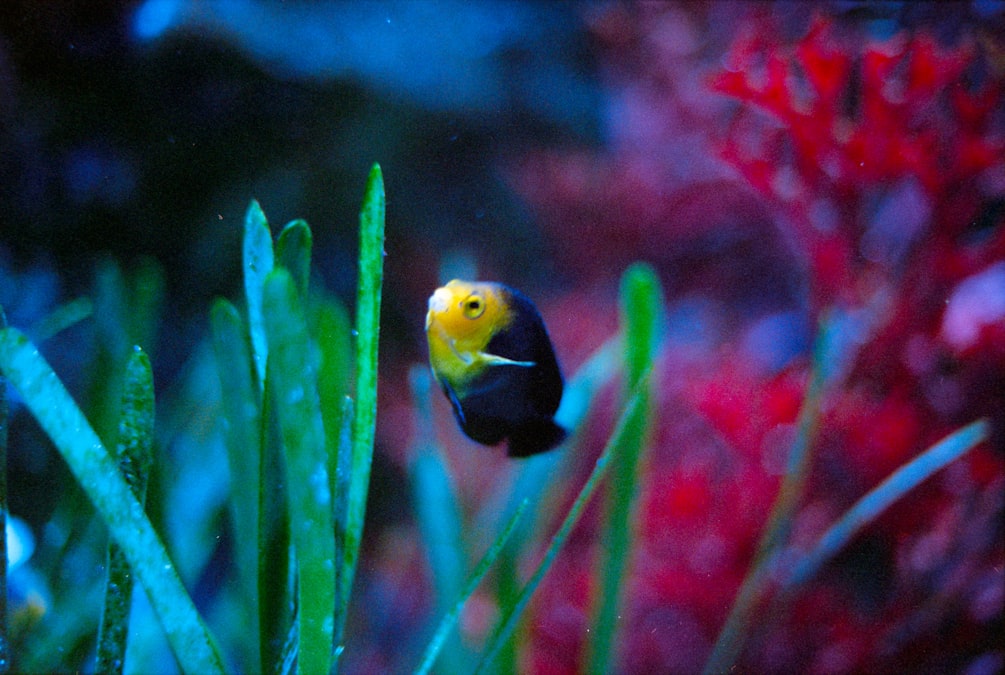
Photo via Unsplash
In the murky rivers of South America and Africa, a group of fish evolved something remarkable: the ability to generate and sense electric fields for navigation and communication. But electric fish face a fundamental engineering problem—when two fish with similar frequencies swim near each other, their signals interfere, creating a jamming effect that degrades their electrical sense. Evolution’s solution to this problem, developed over 150 million years, is teaching engineers how to build better communication systems.
Weakly electric fish generate low-voltage electric organ discharges (EODs) continuously. By sensing distortions in their self-generated electric field through specialized skin receptors called electroreceptors, they can detect objects, navigate in complete darkness, and communicate with other fish. The jamming avoidance response (JAR) is the fish’s elegant solution to signal interference. When two fish with similar frequencies encounter each other, each automatically shifts its own frequency away from the other’s—one fish goes higher, the other goes lower. This frequency separation happens within milliseconds, driven by neural circuits that compute the difference frequency between the fish’s own signal and its neighbor’s.
The neural computation underlying the JAR has become a model system for understanding how brains process sensory information in real time. The fish must determine not just whether the interfering frequency is higher or lower than its own, but which direction to shift. This requires detecting subtle phase relationships between signals—a computation that neuroscientists have mapped down to individual neurons.
The Electric Organ and the Physics of Active Sensing
The electric organ is one of biology’s most dramatic examples of convergent evolution. It evolved independently at least six times in different fish lineages—in South American gymnotiforms like the famous electric eel, in African mormyrids, and in several marine species including electric rays and skates. In each case, the organ is derived from modified muscle cells called electrocytes (or electroplaques), which have abandoned their contractile function and become specialized for generating voltage pulses.
In a weakly electric species like Eigenmannia or Apteronotus, the electric organ runs along the tail and is composed of hundreds to thousands of electrocytes stacked in series, like batteries connected end-to-end. Each electrocyte is innervated by a spinal motor neuron and, when activated, generates a brief voltage pulse of a few millivolts. The individual pulses add together in series to produce the whole-body EOD, which in wave-type species is a nearly sinusoidal oscillation maintained at a species-characteristic and individual-characteristic frequency—typically between 150 and 1,000 Hz.
This self-generated field permeates the water surrounding the fish in a characteristic dipole pattern. Objects in the environment—rocks, plants, prey, predators, or other fish—distort this field because they differ in conductivity from the surrounding water. Conducting objects (like prey items, which are mostly water-filled) focus field lines toward themselves; resistive objects (like rocks or air pockets) push field lines away. The fish’s skin is studded with thousands of electroreceptors that measure the local electric field at each point on the body surface, collectively building a real-time three-dimensional map of nearby objects with a spatial resolution on the order of millimeters.
This active electrolocation system works in complete darkness, through murky water, and at close range—perfectly suited to the benthic niche these fish occupy. It is entirely unlike passive electroreception, the system used by sharks and rays to detect the weak bioelectric fields produced by the muscles of prey hidden in sediment. Active electrolocation creates the sensory field itself and reads its distortions; passive electroreception merely listens. The distinction is roughly analogous to the difference between sonar and passive acoustic listening—and like sonar, active electrolocation comes with a jamming problem.
Neural Circuits for Jamming Avoidance: A Blueprint for Signal Processing
The JAR’s neural implementation has been dissected with exceptional precision, largely through the work of Walter Heiligenberg and colleagues beginning in the 1970s. The computation requires the fish to compare the amplitude and phase of the electric signal at multiple body locations simultaneously, then determine the sign of the frequency difference—whether the neighbor’s frequency is higher or lower than the fish’s own pacemaker frequency. The full neural circuit, from sensory input to motor output, has been mapped at the level of identified cell types.
Two classes of electroreceptors provide the raw input: P-type (probability coding) receptors that fire with increasing probability as field amplitude increases, and T-type (time coding) receptors that fire once per cycle with a timing that encodes the phase of the local field. These two streams of information converge in the electrosensory lateral line lobe (ELL) of the hindbrain, where the amplitude and phase information is preprocessed. The ELL sends projections to the torus semicircularis in the midbrain, where a specific group of neurons—the small cells—perform the critical computation of comparing phase differences at different body locations.
The key insight is that a neighbor’s signal at a slightly higher frequency will produce a beat pattern—an interference waveform—that cycles through phase relationships systematically. By detecting whether phase is advancing or retarding at different body locations, the small cells can determine the sign of the frequency difference and signal to downstream motor areas whether to speed up or slow down the pacemaker nucleus controlling EOD frequency. The entire computation, from sensory input to frequency adjustment, takes less than 50 milliseconds. No other sensorimotor loop in vertebrate neuroscience has been mapped so completely from physics to neural substrate to behavior.
Engineering Lessons from 150 Million Years of Frequency Coordination
The JAR is not merely a biological curiosity—it is a working solution to a problem that engineers working on wireless communication systems and radar encounter constantly: how do multiple transmitters sharing a frequency band avoid mutually destructive interference? The fish solve it with a distributed, peer-to-peer frequency negotiation protocol that requires no central coordinator, operates with incomplete information about neighbors, and converges on a stable solution in milliseconds.
These properties map directly onto desirable characteristics for next-generation wireless networks, particularly in congested spectrum environments where many devices must coexist. Researchers in electrical engineering have drawn explicitly on the JAR architecture to develop adaptive frequency-hopping algorithms for cognitive radio systems—networks where individual nodes sense the local spectral environment and shift their operating frequencies to minimize interference, exactly as electric fish do.
Beyond communications, the electroreceptor system has inspired work in robotic sensing. Several research groups have built artificial electric fish—robots equipped with emitter electrodes and sensor arrays that use active electrolocation to map underwater environments. These systems are particularly attractive for operation in turbid water where optical sensors fail and sonar resolution is insufficient. The fish solved this engineering problem with protein-based sensors and biological neural networks; engineers are rebuilding the same solution in silicon and steel. In both cases, the underlying physics is identical: distortions in a self-generated electric field carry information about the world. Evolution discovered this principle 150 million years ago. We are still learning to fully exploit it.
Sources and Further Reading
- Heiligenberg, W. (1991). Neural Nets in Electric Fish. MIT Press.
- Carr, C.E. & Maler, L. (1986). Electroreception in weakly electric fish. Annual Review of Neuroscience, 9.
- Fotowat, H. & Bhatt, D. (2019). Temporal structure of communication signals and neural coding in weakly electric fish. Current Opinion in Neurobiology.