Photo via Unsplash
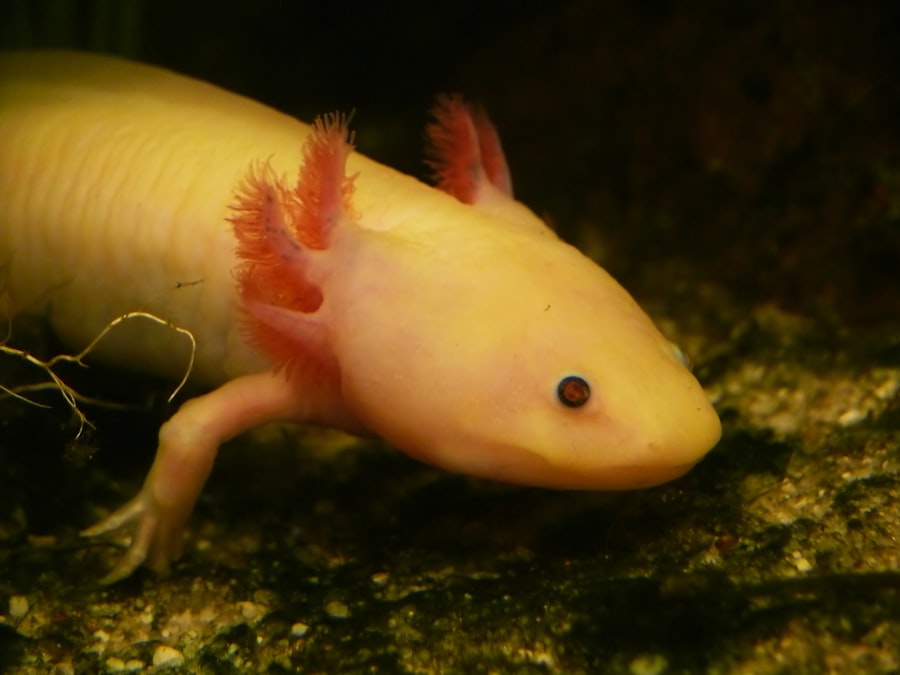
The axolotl—Ambystoma mexicanum, a permanently aquatic salamander native to the lakes of Mexico City—can regrow an amputated limb in its entirety: bone, muscle, nerve, vasculature, skin, and joints, all in correct anatomical proportion and functional connectivity. It can regrow portions of its heart, its spinal cord, and even parts of its brain. No other vertebrate comes close to this regenerative capacity, and scientists are now mapping the bioelectrical blueprint that makes it possible—with direct implications for regenerative medicine in humans.
The Wound Current: Where Regeneration Begins Electrically
Within seconds of amputation, the stump generates a measurable electric current—the wound current—driven by ion transport through damaged tissue. Sodium and calcium ions flow into the wound from surrounding tissue, creating a current that peaks within the first hour and then gradually diminishes as the wound heals. In the axolotl, this wound current is unusually large and sustained compared to non-regenerating vertebrates like mice or humans. Pharmacological disruption of the wound current—using ouabain to block the sodium-potassium ATPase, or amiloride to block sodium channels at the wound surface—dramatically impairs regeneration, reducing the growth of the regenerating bud and producing malformed limbs.
Conversely, artificially amplifying the wound current in non-regenerating species has produced partial regenerative responses. Frog tadpoles, which normally cannot regrow amputated tails after a specific developmental stage, showed significantly improved regeneration when the wound current was augmented using pharmacological means. Adult frogs, which have entirely lost regenerative capacity, showed some response to bioelectrical manipulation—not full regeneration, but measurable improvement in the wound healing response and partial restoration of missing tissue. These experiments established that the bioelectrical environment of the wound is a meaningful variable in regeneration, not merely a correlate of cellular activity that happens to occur.
Voltage Gradients and Positional Information
The most striking bioelectrical finding in axolotl limb regeneration is the existence of a steady voltage gradient along the axis of the regenerating limb bud—the blastema. The blastema is a mass of dedifferentiated cells that forms at the wound surface and contains the progenitors for all the tissues of the new limb. This bioelectric gradient points from the tip of the blastema toward the stump, and its magnitude correlates with the rate of outgrowth. Cells at different positions along the gradient experience different membrane voltages, and these differences appear to inform their developmental programming—what bone, muscle, or connective tissue type they will ultimately become.
The gradient is established and maintained by the coordinated activity of ion channels and gap junctions throughout the blastema. Gap junctions—channels that directly connect the cytoplasm of adjacent cells—allow voltage signals to propagate through the blastema as a community-level electrical signal rather than a cell-autonomous event. Blocking gap junctions disrupts the gradient and produces malformed or incomplete regenerates. Restoring gap junction connectivity with pharmacological activators partially rescues regeneration in contexts where it has been impaired.
The molecular identity of the cells responding to these gradients has been partially characterized. Macrophages—immune cells—are among the earliest responders to the wound bioelectric field, and their behavior determines whether healing proceeds toward regeneration or scar formation. In regenerating species, macrophages adopt a pro-regenerative phenotype characterized by specific cytokine production and the promotion of blastema formation. In non-regenerating species, they adopt a pro-fibrotic phenotype that promotes scar tissue deposition instead. The decision between these phenotypes is influenced by the electrical environment: macrophages in electric fields characteristic of axolotl wounds behave more regeneratively than those in fields characteristic of mouse wounds, even in the same cytokine environment.
Reading the Blueprint for Human Medicine
Humans have macrophages, wound currents, and gap junctions. We have blastema-like cell populations at wound edges that show limited dedifferentiation before committing to scar tissue. What we lack, apparently, is the sustained bioelectrical environment that instructs these cellular elements to pursue regeneration rather than repair. The axolotl’s bioelectrical advantage may not be a matter of having genes or cell types that humans lack—it may be a matter of sustaining the right voltage signals for long enough to coordinate a regenerative outcome.
This reframing has practical implications. Rather than attempting to introduce foreign genes or cell types into human wounds—a complex genetic engineering approach—bioelectrical interventions might be able to redirect existing human wound biology toward more regenerative outcomes. Wearable bioelectrical devices that maintain wound currents at axolotl-like magnitudes for the critical window during which blastema formation would need to occur are already in development for applications in digit tip regeneration—a limited regenerative capacity that humans retain in childhood and lose in adulthood. Whether the approach can be extended to more complex structures remains the central question driving axolotl bioelectricity research.
The axolotl’s electrical blueprint is not a magic spell. Regeneration requires the right cells, the right molecular signals, and the right mechanical environment in addition to the right bioelectrical conditions. But the evidence increasingly suggests that getting the bioelectricity right may be the key that unlocks the rest—that the voltage gradients of the axolotl blastema are not merely accompanying regeneration, but actively organizing it.
Time, Scale, and the Patience Required
Axolotl limb regeneration takes weeks. The blastema forms over days, grows through a period of rapid cell proliferation, and then differentiates into the full limb structure in a carefully timed sequence that recapitulates development. Throughout this process, bioelectric signals are continuously present and continuously read by the cells that are building the new structure. The duration of the bioelectric environment matters as much as its character: brief exposure to the right voltage gradient is not sufficient; the signals must be sustained for the cells to complete their programming. This temporal dimension is one of the most challenging aspects of applying bioelectrical insights from axolotl biology to mammalian medicine, where wound healing proceeds on shorter timescales and maintaining a controlled bioelectric environment over weeks in a human patient is a significant engineering challenge. Solving it—developing devices that can create and sustain the right bioelectric conditions at a wound site for the duration needed to organize tissue regeneration—is one of the central engineering problems in the field.
The axolotl’s electrical blueprint will not translate directly to human biology—the differences in immune response, wound healing timescale, and cellular programming between salamanders and mammals are too large for simple transfer. What it provides is a proof of principle: that a vertebrate can regenerate a complete limb, and that bioelectric signals are a necessary and sufficient part of the organizational system that makes regeneration possible. Identifying the human equivalents of each component—the wound current generators, the voltage-sensing stem cells, the gap junction networks that propagate positional information—and determining what it would take to reconstitute a regenerative bioelectric environment in human tissue is the program of work that axolotl research makes possible. It is a long program, measured in decades. The axolotl has been waiting patiently for millions of years.
Sources and Further Reading
- Tseng, A.S. & Levin, M. (2013). Cracking the bioelectric code. Communicative & Integrative Biology, 6(1).
- Ferrier, J. et al. (1986). Electrophysiological responses of fibroblasts and chondrocytes to applied electric fields. Journal of Cellular Physiology.
- Levin, M. (2014). Molecular bioelectricity: how endogenous voltage potentials control cell behavior and instruct pattern regulation in vivo. Molecular Biology of the Cell.