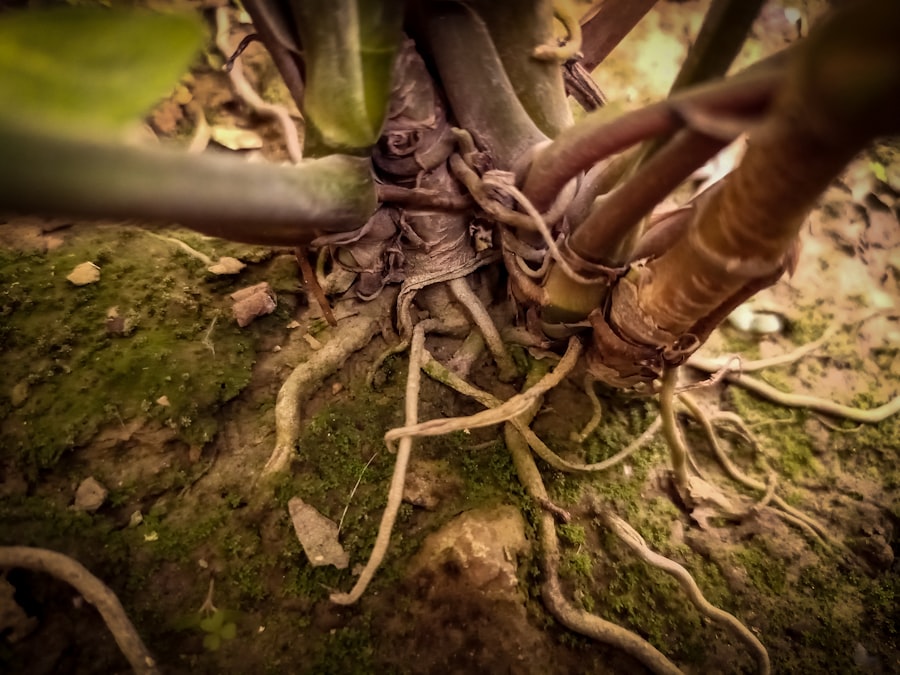
Photo via Unsplash
Beneath a mature forest, invisible to anyone walking through it, runs one of the most sophisticated communication networks on Earth. Trees exchange nutrients, chemical signals, and—increasingly evidence suggests—electrical signals through a dense web of mycorrhizal fungal connections that link their root systems across acres of soil. Scientists have called this network the Wood Wide Web, and while the name risks over-romanticizing what is ultimately a set of biochemical and biophysical processes, the underlying biology is genuinely remarkable. Decoding the electrical dimension of tree communication is one of the more surprising frontiers in plant bioelectricity research.
Electrical Signals in Individual Trees
Before considering communication between trees, it helps to understand how individual trees handle electrical signaling internally. Trees, like other plants, maintain and propagate electrical signals through their vascular tissue in response to environmental stimuli. Action potentials generated in leaf tissue travel through the phloem—the living tissue that transports sugars and other organic compounds—at speeds of 1 to 10 centimeters per second. Variation potentials, which are slower and more sustained signals associated with hydraulic and chemical changes in the xylem, propagate at comparable speeds through a distinct tissue pathway.
These signals coordinate systemic responses to local events. When a leaf is damaged by an herbivore, an electrical signal propagates through the tree within minutes, triggering the production of volatile organic compounds—terpenes, aldehydes, and other defensive chemicals—in undamaged tissue throughout the canopy. This response, documented through careful electrophysiology combined with chemical analysis, demonstrates that the electrical signal precedes and likely triggers the chemical response: the voltage change arrives at distant leaves before the chemical messengers that the signal induces could have diffused there.
Trees also generate spontaneous electrical oscillations under some conditions—slow rhythmic fluctuations in membrane potential across large tissue areas that appear to correlate with diurnal cycles and environmental conditions. The functional significance of these oscillations is not fully understood, but their existence suggests that tree electrical activity is not merely reactive—responding to discrete stimuli—but includes tonic, continuous components that may reflect ongoing monitoring of the tree’s physiological state.
The Mycorrhizal Network: Wiring the Forest
Mycorrhizal fungi form associations with the roots of more than 90% of terrestrial plant species. In a mature temperate forest, a single teaspoon of soil contains miles of fungal hyphae—threadlike filaments that penetrate root cells and extend through the soil, dramatically increasing the root’s effective surface area for water and mineral absorption. Crucially, individual fungal networks connect multiple trees, sometimes linking dozens of individuals of the same or different species into a continuous hyphal network that spans the entire forest stand.
The nutrient-sharing capacity of these networks has been documented in elegant isotope-tracing experiments. Carbon fixed by photosynthesis in one tree can appear in neighboring trees within days, traveling through the shared fungal network. Phosphorus and nitrogen move similarly, with evidence that larger, more resource-rich trees contribute nutrients to smaller, shaded seedlings—a pattern that has been anthropomorphically described as “mother trees” supporting their offspring, though the mechanism is simply the physics of diffusion and osmosis along concentration gradients in the fungal hyphae.
Whether electrical signals also travel through these networks is the more contentious and exciting question. Fungi generate their own electrical signals—action potential-like voltage spikes have been recorded in several fungal species—which means that any electrical signal detected in a connected plant could, in principle, have originated in the fungal network rather than in a neighboring tree. Carefully controlled experiments using severed connections, pharmacological channel blockers, and simultaneous multi-point recording are needed to establish the direction and origin of signals in connected systems, and these experiments are technically demanding enough that clear answers have been elusive.
What We Know and What We Are Learning
The strongest evidence for inter-tree electrical communication comes from experiments with herbaceous plants in controlled conditions, where mycorrhizal connections can be established and severed under laboratory conditions with more precision than is possible in a forest. Bean plants connected by common mycorrhizal networks showed changes in electrical activity—measurable as voltage fluctuations at root electrodes—following herbivore attack on a connected neighbor. Plants with severed connections did not show these changes. The electrical signal preceded the defensive chemical responses by enough time to suggest it was not simply a result of chemical signaling through the network.
For trees, direct electrophysiological evidence in intact forest conditions remains thin, primarily because of the technical difficulty of making stable electrode contacts in the dynamic, ion-rich environment of a root system in living soil. Research groups in Germany, Japan, and the United Kingdom have instrumented forest plots with arrays of electrodes in the soil at root depth, recording spontaneous and stimulus-evoked electrical activity over weeks and months. The signals they detect are complex—mixtures of electrical activity from roots, fungi, bacteria, and the soil electrochemical environment—and separating tree-specific signals from the background requires sophisticated analysis.
What is emerging from these field studies is a picture of the forest soil as a continuously electrically active environment, not an inert medium through which chemical signals occasionally diffuse. The electrical activity changes seasonally, responds to rainfall and temperature, and shows spatial patterns that correlate loosely with the distribution of root systems. Whether these patterns encode information that individual trees sense and respond to, or whether they are simply the electrical signature of a complex ecosystem going about its business, is a question that will require another decade of careful measurement to resolve. The forest is speaking electrically. Learning to listen is the challenge.
The forest’s electrical life also suggests new approaches to agricultural monitoring. If the specific electrical signatures of drought stress, pathogen infection, and herbivore damage can be reliably identified in individual plants, sensor networks that monitor crop electrical activity continuously could provide earlier warning of threats than any current approach—catching disease spread before visual symptoms appear and enabling targeted intervention rather than broad prophylactic treatment. The challenge is translating insights from laboratory electrophysiology in model species to robust, scalable sensors that function in the wet, biologically complex environment of agricultural soil. That translation is underway in several research groups, driven by the same basic insight that motivates all of plant bioelectricity research: that the electrical language plants use to talk to themselves—and perhaps to each other—contains information that agriculture has not yet learned to read.
Sources and Further Reading
- Simard, S.W. et al. (1997). Net transfer of carbon between ectomycorrhizal tree species in the field. Nature, 388.
- Babikova, Z. et al. (2013). Underground signals carried through common mycelial networks warn neighbouring plants of aphid attack. Current Biology, 23(9).
- Volkov, A.G. (2012). Plant electrostimulation and data acquisition. Frontiers in Plant Science.