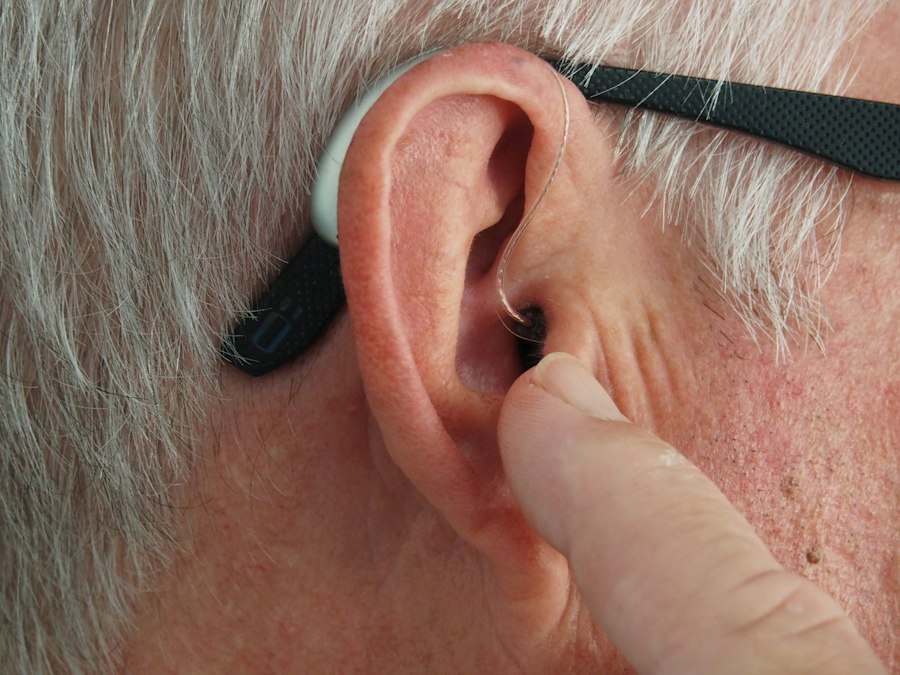
The old way of stimulating the vagus nerve required a surgeon, a pulse generator tucked beneath the clavicle, and lead wires threaded up the neck to wrap around the nerve itself. It worked, but it was a last resort: reserved for the sliver of depression patients who had failed drug after drug, willing to accept vocal cord side effects and a five figure procedure for a chance at relief. That calculus is changing. A comprehensive review published in the journal Med-X, reported by neurosciencenews.com, lays out how wearable electrodes clipped to the ear or pressed against the neck are doing something the implanted version never could: making vagus nerve stimulation a therapy you put on in the morning.
The stakes are not small. Major depressive disorder affects more than 280 million people worldwide, according to the review, and roughly a third of patients in clinical settings do not achieve remission despite working through multiple treatment regimens. That population, the treatment-resistant third, is exactly where neuromodulation has tried to make its case for the past two decades. The question the Med-X authors are really asking is whether that case can now be made without a scalpel.
The Nerve Was Always the Right Target, Surgery Was the Bottleneck
Cranial nerve X is the body’s main parasympathetic conduit, carrying signal in both directions between organs in the chest and abdomen and the brainstem’s nucleus tractus solitarius. From that relay station, the review notes, projections fan out to the locus coeruleus, the dorsal raphe nucleus, the amygdala, and the prefrontal cortex: the exact circuitry implicated in mood regulation, arousal, and emotional reactivity. That anatomy is why VNS was never a fringe idea. It is also why implantation was always overkill for anything short of severe, intractable cases. The nerve branches close enough to the skin at the outer ear and in the neck that electrical pulses can reach it without cutting anything open.
Two non-invasive approaches have emerged from that anatomical fact: transcutaneous auricular VNS, which stimulates the auricular branch of the vagus nerve where it surfaces in the ear, and transcutaneous cervical VNS, which targets the nerve through the skin of the neck. Both skip the operating room entirely.
Three Biological Levers, One Electrode
What the review emphasizes, and what tends to get flattened in coverage of “vagus nerve hacking,” is that wnVNS is not pulling one lever. It engages three interconnected physiological systems at once: it nudges monoamine signaling, the same neurotransmitter pathways targeted by SSRIs and SNRIs; it promotes neuroplasticity, the brain’s capacity to rewire connections in response to input; and it suppresses systemic inflammation, consistent with the inflammatory reflex work that made Kevin Tracey’s lab at the Feinstein Institutes for Medical Research central to this field in the first place. Depression has an inflammatory signature in a meaningful subset of patients, elevated cytokines, blunted heart rate variability, and a wearable device that can touch all three systems through one electrode is a genuinely different proposition than a pill that touches one receptor family.
The vagus nerve doesn’t deliver one signal. It delivers three, through one electrode.
That multiplicity is also why the clinical trials cited in the review report improvement across more than just mood scales. Studies of taVNS and tcVNS in depressive cohorts show meaningful drops in Hamilton Depression Rating Scale scores alongside improvements in heart rate variability and normalized cortical oscillation patterns, autonomic and neurophysiological markers moving in tandem with self-reported mood.
Engineering Decides Whether the Signal Ever Reaches the Nerve
None of this works if the electrode cannot get current past the skin. The review is blunt about this: pulse width, frequency, current amplitude, duty cycle, and the impedance of the skin-electrode interface determine whether a device recruits the deep, myelinated A-beta vagal afferents that carry the therapeutic signal, or just irritates skin and produces pain without touching the nerve underneath. This is the unglamorous part of bioelectronic medicine that decides everything. A transcutaneous stimulator is not a TENS unit with a different label. Getting a clean, comfortable, repeatable dose into a nerve that sits millimeters under variable skin impedance, differing by sweat, hydration, and anatomy from one wearer to the next, is a materials and signal processing problem as much as a neuroscience one.
Getting current past the skin is the unglamorous problem that decides whether any of this works.
This is precisely where flexible bioelectronics are earning their keep: conformal electrodes, skin-safe hydrogels, and impedance-sensing circuits that adjust output in real time are what separate a device that works in a lab from one that works on a commuter’s ear for twenty minutes before a meeting.
Implanted vs. Wearable: What the Trade-off Actually Looks Like
| Approach | Delivery | Access point | Primary limitation |
|---|---|---|---|
| Implanted cervical VNS | Surgical, subclavian pulse generator | Severe, intractable treatment-resistant cases | Surgical risk, cost, vocal cord side effects |
| Transcutaneous auricular VNS | Ear-worn electrode | Home, self-administered | Unstandardized dosing protocols |
| Transcutaneous cervical VNS | Neck-worn electrode | Home, self-administered | Skin-electrode impedance variability |
The Field’s Real Problem Isn’t the Hardware, It’s the Protocol
Here is the part that matters, and the part most coverage of wearable neurotech skips past because it is less exciting than a product photo: the Med-X authors flag the existing clinical literature as fragmented, built on small sample sizes, inconsistent stimulation protocols, and outcome measures that do not line up across studies. Nobody has established a standardized stimulation window. Nobody has a clean dose-response curve. Nobody knows what a maintenance protocol looks like a year out. Those are not footnotes. They are the reason wnVNS devices on the market today vary wildly in claimed settings, and the reason regulators have been cautious about efficacy claims for depression specifically, as distinct from the FDA-cleared uses in epilepsy and migraine.
The counterargument, that this is simply where every new modality sits before the randomized trials catch up, is fair. Transcranial magnetic stimulation went through the same fragmented decade before protocols converged. But TMS converged because it stayed in clinics, under controlled conditions. Wearable VNS is heading straight into consumer hands before that convergence happens, which raises the dosing question for millions of unsupervised users rather than a few hundred trial participants.
Closed-Loop Is the Actual Endpoint, Not a Feature
The review’s clearest forward claim is that static, one-size-fits-all stimulation is a transitional technology, not the destination. Pair a vagal electrode with continuous electrocardiography, galvanic skin response, and peripheral temperature sensing, run that data through a machine learning model trained to recognize autonomic dysregulation or the physiological signature of depressive withdrawal, and the device stops being a timer-based gadget and becomes a closed-loop system: one that fires stimulation when the body’s own signals say it is needed, not on a fixed schedule set by a clinician who cannot see what is happening at 2 a.m.
The brain’s own signals, not a fixed schedule, decide when the device fires.
That is a genuinely different product category than today’s ear clips. It is closer to a continuous glucose monitor paired with an insulin pump than to a wellness wearable, and it is the version of this technology that would actually justify the “personalized medicine” language the field likes to use.
What’s shipping now is the easy half of the problem: flexible electrodes that can comfortably sit on an ear or a neck for an hour. What’s unsolved is the hard half, the standardized dosing, the multi-year outcome data, the regulatory pathway for a device that adapts its own stimulation in real time. Until that catches up, wearable VNS is a legitimate and promising mechanism wrapped in a market that is moving faster than its evidence base, and the patients most likely to buy one, people who have already failed multiple antidepressants, are the ones with the least room for a device that guesses wrong.
Source: neurosciencenews.com
Credit: Mark Paton on Unsplash