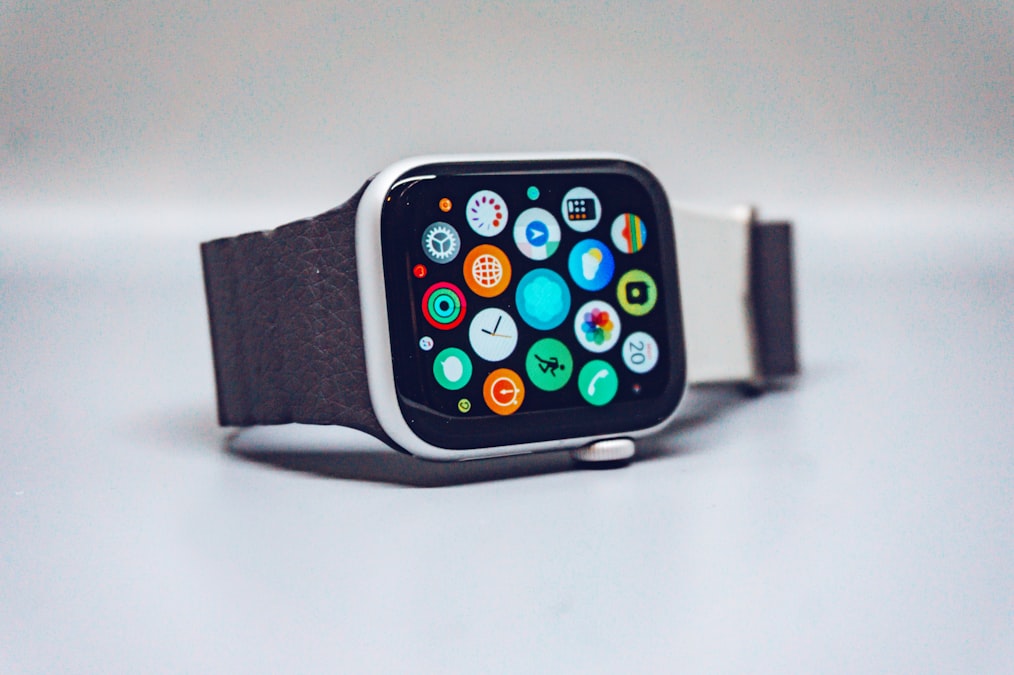
I have worn every Apple Watch since the Series 4 introduced ECG, and I have learned to be suspicious of the gap between what a wearable measures and what a headline claims it measures. So when the rumor cycle around Apple Watch Series 11 settled on “continuous blood pressure via bioimpedance,” my first reaction was not excitement. It was a question: continuous, according to whose validation standard, and bioimpedance measuring what, exactly, against what ground truth?
That question matters more than it sounds like it should. Blood pressure is not heart rate. A wrong heart rate reading is an annoyance. A wrong blood pressure reading, trusted by someone titrating their own antihypertensive medication, is a different category of problem. The FDA has treated it that way for years, and Apple’s own track record on this exact feature tells you the company knows it too.
What Apple Actually Shipped Before This, and Why It Stopped Short of a Number
In September 2024, Apple rolled out hypertension notifications on Series 9, Series 10, and Ultra 2 through a watchOS update, after clearing the feature with the FDA. It does not display a blood pressure reading. It analyzes optical pulse waveform data from the green LED heart sensor, collected passively over roughly 30 days, looking for patterns in vessel behavior that correlate with chronically elevated blood pressure. If the algorithm flags something, the watch tells the wearer to log their blood pressure with an actual cuff over the following weeks and see a doctor. That is the entire output: a prompt, not a measurement.
A number on a screen isn’t a diagnosis. It’s a prompt to go get a cuff.
Apple built that feature cautiously on purpose. The company had blood pressure sensing in its sights for close to a decade of patent filings before it shipped anything, and what it shipped was the least clinically risky version of the idea: a screening nudge, not a monitor. That history is the single best piece of evidence against the idea that Series 11 leaps from “notification” to “continuous numeric reading” in one generation, using a sensing modality, bioimpedance, that the company has never validated in a shipped consumer product for this specific purpose.
Bioimpedance Is Real Physiology. It Is Not a Shortcut Around the Cuff.
Bioimpedance sensing works by pushing a tiny, imperceptible alternating current through tissue and measuring the voltage drop that results. Tissue composition changes that resistance: fat conducts differently than muscle, and blood volume in a vessel changes the local impedance as the vessel fills and empties with each heartbeat. That last part is the entire premise behind repurposing bioimpedance for cardiovascular sensing. It is also why the idea is not new. Impedance plethysmography has been used in hospital settings since the 1960s to estimate stroke volume and detect deep vein thrombosis. Impedance cardiography is a legitimate, if niche, clinical tool.
What bioimpedance gives you directly is a waveform that tracks blood volume change over time at the sensing site. It does not give you a pressure value in millimeters of mercury. Getting from “here is a pulse waveform shaped this way” to “your systolic pressure is 138” requires a model, and that model has to be calibrated against a real cuff reading for a given person, then trusted to hold as arterial stiffness, hydration, temperature, and wrist position all shift throughout the day. This is the exact same calibration problem that has dogged pulse transit time and photoplethysmography based cuffless blood pressure devices for fifteen years. Bioimpedance does not solve it. It just gives you a different flavored waveform to feed into the same unsolved calibration model.
Bioimpedance can find the pulse. It has never reliably found the pressure.
Ramakrishna Mukkamala, a biomedical engineer who has spent close to two decades publishing on cuffless blood pressure estimation, has made this point repeatedly in the peer reviewed literature: waveform based blood pressure estimates tend to look accurate in short validation windows and then drift badly over days and weeks, because the underlying relationship between the waveform feature and actual arterial pressure is not fixed. It moves with the person’s physiology. A device that nails its accuracy on day one of calibration and quietly drifts by day twenty is arguably worse than no device at all, because it keeps the confident, wrong number on the wrist.
The Regulatory Ceiling Nobody in the Rumor Coverage Mentions
Cuffless blood pressure devices are measured against a real standard: ISO 81060-2, maintained with input from the Association for the Advancement of Medical Instrumentation, which sets the accuracy bar relative to a reference cuff across a population with a real spread of blood pressures. The FDA has been cautious specifically because most cuffless approaches validate well in narrow, healthy, resting populations and fall apart at the tails, in people with arrhythmias, in people with genuinely high or low pressure, in people with arterial stiffness from age or diabetes. Those are precisely the people a hypertension feature most needs to work for.
This is why Samsung’s Galaxy Watch blood pressure feature, which uses a PPG waveform calibrated against a cuff reading the user has to re-perform roughly every four weeks, has been available in South Korea and a number of other markets for years but never cleared for the same continuous, uncalibrated use in the United States. It is why Aktiia, a Swiss company with a CE marked optical wristband, still requires periodic cuff recalibration and markets its device as a trend tracker rather than a diagnostic replacement. And it is why Omron’s HeartGuide, cleared by the FDA in 2019, solved the accuracy problem the boring way: it is an actual oscillometric cuff built into a wristwatch case, which inflates and squeezes the wrist for a real reading. It is accurate because it is, mechanically, still a blood pressure cuff.
| Device | Sensing method | Output | US regulatory status |
|---|---|---|---|
| Apple Watch (Series 9/10, Ultra 2) | Optical PPG waveform, 30-day passive analysis | Hypertension notification, no numeric reading | FDA cleared, September 2024 |
| Samsung Galaxy Watch | PPG, calibrated to a cuff reading every ~4 weeks | Numeric systolic/diastolic estimate | Not cleared for this use in the US |
| Aktiia band | Optical PPG, periodic cuff calibration | 24-hour trend readings | CE marked, no FDA clearance |
| Omron HeartGuide | Oscillometric, inflatable cuff in a watch band | Direct cuff measurement | FDA cleared, 2019 |
| Apple Watch Series 11 (rumored) | Bioimpedance, claimed continuous | Unconfirmed | No public FDA filing as of this writing |
Look at that table honestly and the pattern is obvious. Every device that gives you an actual number either inflates a physical cuff or leans on periodic cuff recalibration that the FDA has not yet cleared for uncalibrated, continuous use domestically. Nothing in that list gets a real blood pressure number from optical or electrical waveform sensing alone, with zero cuff involvement, cleared for the US market. If Series 11 is the first, it would not be an incremental update. It would be the single biggest wearable sensing breakthrough of the decade, on a par with the original ECG clearance. Apple has not filed anything with the FDA that would suggest that is imminent, and Apple does not tend to leak its actual regulatory submissions ahead of clearance.
Reading the Patent Trail Instead of the Rumor Mill
Apple has held patent applications touching on bioimpedance sensing for body composition, hydration, and cardiovascular parameters for years, the kind of filings that get periodically rediscovered by patent trackers and repackaged as “Apple Watch to get X feature next year.” Bloomberg’s Mark Gurman, who has the best track record of anyone covering Apple’s actual product roadmap, has reported on Apple’s long-running interest in blood pressure sensing broadly, tied to the hypertension notification work that did ship. I have not seen reporting from him, or anyone with a comparable track record, confirming a cleared, continuous, cuffless bioimpedance blood pressure feature slated for Series 11 specifically. Patent filings describe research directions a company is exploring, not products a company is about to ship. Apple files far more patents than it ever turns into features, on purpose, partly to keep competitors guessing.
The FDA didn’t reject cuffless blood pressure. It refused to grade it on a curve.
The more likely outcome, and the one consistent with how Apple has actually handled this exact feature category before, is an expanded or more sensitive version of the hypertension notification, possibly incorporating a bioimpedance signal alongside the existing optical one to improve the underlying detection algorithm’s accuracy. Multi-modal sensing genuinely can improve a screening algorithm’s confidence without requiring the leap to a validated numeric reading. That would still be a real advance. It would also be a completely different claim than “continuous blood pressure,” and the difference between those two claims is exactly the difference between a wellness feature and a Class II medical device that has cleared a validation study most cuffless approaches still fail.
What I Would Actually Watch For at the September Event
The tell will not be in Apple’s on-stage language, which tends to stay deliberately vague on anything health-adjacent until regulatory clearance is locked. The tell will be in the FDA’s public device database and in whether Apple publishes a validation study, the kind it did for atrial fibrillation detection and for the hypertension notifications, showing performance against a reference standard in a defined population. No study, no numeric blood pressure claim, regardless of what a keynote slide implies with a wrist graphic and an upward trend line. That has been Apple’s actual pattern for a decade of health features: overpromise nothing publicly that it cannot defend in a regulatory filing, because the one thing Apple has never wanted is a Masimo-style legal fight over a health claim, and it has already had one of those, over pulse oximetry, that it is still not fully out from under.
If Series 11 ships a bioimpedance sensor at all, the honest, falsifiable prediction is this: it will improve the confidence of the existing hypertension screening pathway, not replace the cuff. The day an Apple Watch gives you a real-time systolic and diastolic number with FDA clearance and no cuff calibration step, that will be front page news across cardiology, not a rumor mill line item, and it will represent a genuine scientific first that neither Samsung, nor Aktiia, nor a decade of academic cuffless blood pressure research has managed to clear. Until that specific milestone happens, treat “continuous blood pressure via bioimpedance” the way you’d treat any number your watch gives you without a cuff attached: as a hint worth checking, not a reading worth trusting.