Three machines, three technicians, three timescales. That is what it currently takes to know a person’s cortisol, glucose, and nerve activity at the same moment. A blood draw goes to an endocrinology lab and comes back in hours. A continuous glucose monitor threads a filament under the skin and reports every five minutes. An EMG technician squirts gel on a forearm and asks you to flex, wired into a cart that has not changed much since the 1980s. Nobody runs all three at once, on the same patch of skin, in real time. That is starting to change, and the labs doing it are not the ones you’d expect from the marketing copy of consumer wearables.
Wei Gao’s group at Caltech, in the Andrew and Peggy Cherng Department of Medical Engineering, has spent close to a decade building toward this convergence. Gao trained under Ali Javey at UC Berkeley, where in 2016 the two published a sweat sensor array in Nature that measured glucose, lactate, sodium, and potassium simultaneously on a flexible patch, one of the first times multiple sweat analytes were captured on a single wearable substrate rather than farmed out to separate strips and meters. That paper is the ancestor of nearly everything that has followed. Gao’s lab later added cortisol sensing via aptamer-functionalized field-effect transistors, described in Science Advances, and then combined chemical sensing with electrophysiology, stacking sweat biomarker readouts next to ECG and EMG electrodes on one flexible skin interface. The current wave of cortisol-glucose-nerve patches is the logical endpoint of that sequence, not a sudden leap.
What’s actually new is the simultaneity, and simultaneity turns out to be the hard part. Building three sensors is not the same problem as building one sensor three times.
Why Cortisol Was Always the Odd One Out
Glucose sensing is old news, electrochemically speaking. Glucose oxidase reacts with glucose and produces a current proportional to concentration. That enzymatic trick is why finger-stick meters have worked since the 1980s and why Dexcom and Abbott can put a filament under the skin and trust the current it generates. Cortisol does not cooperate the same way. It is a steroid hormone, small, lipophilic, and present in sweat at concentrations that swing with the time of day and the state of the adrenal axis rather than with a clean enzymatic relationship. There is no cortisol oxidase. You need something that recognizes the molecule by shape, typically an antibody or a synthetic aptamer bound to a transistor gate, and you need the binding event to be reversible enough to track a rising and falling hormone rather than just registering that cortisol showed up once.
Nerve and muscle signals are a third animal entirely. EMG and surface nerve signals are electrical, not chemical. They do not require a reagent or a binding site. They require a low-impedance, stable contact with skin that does not drift when the wearer sweats, moves, or stretches. Which creates a direct conflict with the other two sensors on the same patch: sweat is exactly what the chemical sensors need to collect, and exactly what destabilizes the electrical baseline the electrophysiology sensors depend on.
Sweat glucose is a rumor about blood glucose, told through a wet membrane.
That tension shows up everywhere in this literature. Sweat glucose sits roughly two orders of magnitude below blood glucose, and its concentration depends heavily on sweat rate, not just blood concentration, which is why sweat-based glucose sensing has never fully displaced interstitial fluid monitors like the Libre or Dexcom for people managing diabetes. A patch that reads sweat glucose is measuring a proxy of a proxy, and it needs a sweat-rate correction built into the math before the number means anything at the wrist.
The Architecture Nobody Talks About in the Press Release
The engineering solution, in the labs pursuing this seriously, involves physically zoning the patch. A microfluidic layer channels sweat to isolated chemical sensing chambers, an aptamer-gated transistor sits in one chamber for cortisol, an enzymatic amperometric electrode sits in another for glucose, and dry, gel-free electrodes sit on a separate region of skin entirely for the electrical signal, wired through a flexible interconnect that keeps the electrical ground away from the wet chemistry. None of this is exotic by itself. Rogers Group at Northwestern’s Querrey Simpson Institute for Bioelectronics has built microfluidic sweat collection patches for years, including a commercialized version through Epicore Biosystems that Gatorade uses for hydration and electrolyte tracking in athletes. What’s genuinely new is putting a stable electrophysiology channel on the same flexible substrate without the sweat channel poisoning the electrical readout, and running the signal processing to separate three physiologically linked but electronically unrelated data streams in real time on a chip small enough to wear.
The hard part was never fitting the sensors. It was making them ignore each other.
Crosstalk is the unglamorous villain of this entire field. Ionic contamination from sweat electrolytes can shift the baseline of a nearby field-effect transistor. Motion that flexes the substrate stretches the microfluidic channels and changes flow rate, which corrupts the cortisol and glucose readings independent of anything happening hormonally. Temperature swings the binding kinetics of the aptamer. Every fix for one sensor tends to be a compromise for another, which is why a lab paper demonstrating three-signal capture on a bench is a meaningfully different achievement than a device that survives a workout, a shower, and eight hours of wear.
What Three Signals Together Actually Tell You
Here is the part that gets glossed over in coverage of wearable sensors generally: having three numbers does not automatically produce insight. Cortisol, glucose, and peripheral nerve or muscle activity are physiologically entangled, not independent. Cortisol drives gluconeogenesis and raises blood glucose under stress. Sympathetic nervous system activation, which shows up in electrodermal and some EMG signatures, precedes and accompanies the cortisol spike by minutes. A single patch that captures all three at once is not really giving you three separate readings. It is giving you a timestamped snapshot of one stress-metabolic cascade unfolding across three different physical channels, which is a fundamentally different kind of data than three isolated measurements taken hours apart in a clinic.
That is the actual pitch, and it is a real one. Endocrinologists have never had continuous cortisol data outside of expensive, invasive sampling protocols in research settings. Combining it with continuous glucose and a real-time marker of autonomic or neuromuscular activation could, in principle, let researchers watch the stress response happen rather than reconstruct it after the fact from a single serum draw that only captures cortisol’s level at one arbitrary moment in a pulsatile, diurnal hormone. Athletic training programs already chase this kind of data informally, using heart rate variability as a stress proxy because nothing better exists at the wrist. A validated cortisol channel would replace a proxy with the actual molecule.
Where the Comparison to Existing Devices Breaks Down
It’s worth being blunt about what these patches are not. They are not a replacement for a clinical cortisol panel, which still requires serum or saliva assays with tighter accuracy standards than any sweat-based aptamer sensor has demonstrated in FDA submissions to date. They are not a replacement for a cleared continuous glucose monitor for diabetes management, since FDA clearance for glucose monitoring is analyte-specific and tied to the exact sensing chemistry and clinical validation data submitted, not something that transfers because a device happens to also measure glucose. And they are not a clinical-grade EMG system, since surface electrodes on a flexible patch trade signal fidelity for wearability compared to a gelled electrode array run by a technician who controls for motion artifact.
| Signal | Patch sensing method | Established standalone comparison | Main limitation on-patch |
|---|---|---|---|
| Glucose | Enzymatic amperometric, sweat-based | Dexcom G7, Abbott FreeStyle Libre (interstitial fluid, subcutaneous filament) | Sweat glucose concentration is roughly two orders of magnitude below blood glucose and highly sweat-rate dependent |
| Cortisol | Aptamer or antibody-gated field-effect transistor, sweat-based | Serum or salivary immunoassay, lab turnaround of hours | Binding reversibility and diurnal variability complicate continuous tracking |
| Nerve or muscle signal | Dry surface EMG electrodes on flexible substrate | Clinical EMG systems, gelled electrode arrays | Motion artifact and impedance drift from nearby sweat collection |
The honest framing is that this is a research instrument first, wandering toward eventual clinical or consumer use the way continuous glucose monitors did over roughly two decades before Abbott and Dexcom got them onto ordinary wrists without a prescription. The first CGMs cleared by FDA in the late 1990s were minimally continuous and required calibration against finger sticks. It took until the mid-2010s for a factory-calibrated version to reach patients directly. A patch reading three physiologically linked but chemically and electrically distinct signals is earlier on that curve, not later.
The Real Bottleneck Is Interpretation, Not Sensors
Sensor engineering in this space has genuinely advanced. What has not kept pace is the analytic layer that turns three simultaneous, noisy, cross-correlated waveforms into a clinically actionable statement. A cardiologist reading an ECG has a century of shared reference points: a QRS complex means something specific regardless of who is reading it. There is no equivalent shared vocabulary yet for what a cortisol rise paired with a glucose rise paired with a particular EMG or sympathetic signature means, prognostically, for a given patient. Building that vocabulary requires large longitudinal datasets tying patch readings to real clinical outcomes, which nobody has assembled yet because the hardware to generate that data has only existed in usable form for a few years.
Three signals on one patch do not add up to one truth automatically.
That is not a knock against the engineering. It is a statement about sequencing. Sensor convergence had to happen before the data science could even start, and it has only just happened. The next five years of this field will be less about squeezing a fourth or fifth analyte onto the patch and more about running the studies that tell clinicians what a synchronized cortisol-glucose-nerve trace actually predicts, in whom, and under what conditions.
The device that reads all three at once is not a diagnostic yet. It is a question generator, a way to finally watch the stress-metabolic-neural loop happen in one continuous recording instead of guessing at its shape from three disconnected snapshots. Whether that loop, once visible, turns out to predict anything clinically useful, burnout, metabolic syndrome onset, autonomic dysfunction, is the open question nobody’s patch has answered yet, and it is a better question than whether the sensors fit on the skin.
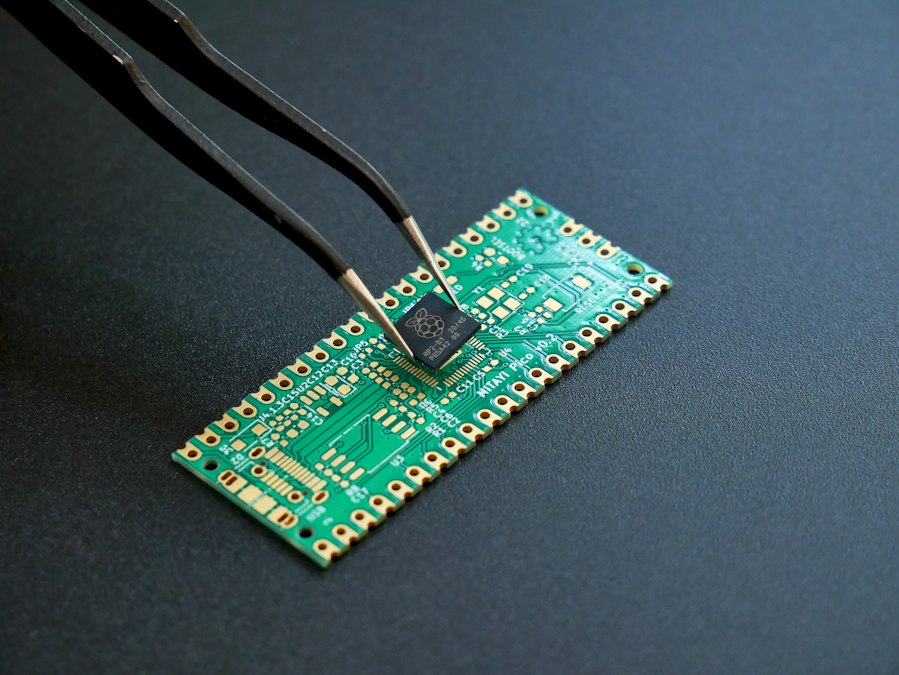
Credit: Vishnu Mohanan on Unsplash