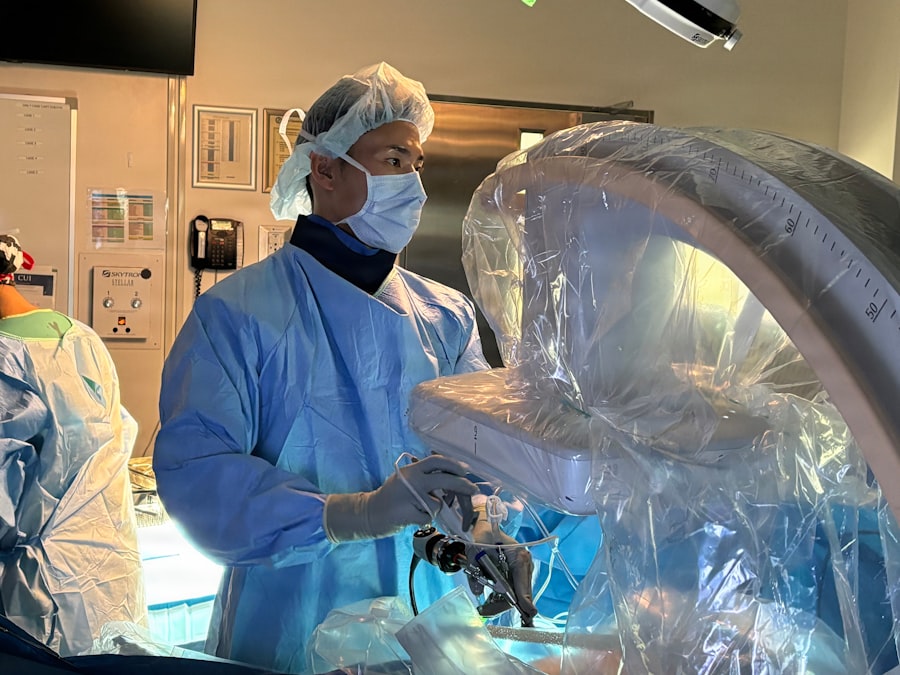
Photo via Unsplash
Medtronic has long dominated the deep brain stimulation market with devices that work—but work crudely, delivering constant electrical pulses to the brain regardless of what the brain is actually doing. That is changing. The company’s Percept PC neurostimulator introduced the first commercial brain-sensing capability to DBS, allowing the same implanted leads that deliver stimulation to simultaneously record local field potentials from surrounding tissue. The result is the hardware foundation for what clinicians and engineers are calling adaptive DBS: a self-tuning brain implant that adjusts its output in real time based on the patient’s instantaneous neural state.
What Conventional DBS Gets Wrong
Standard deep brain stimulation for Parkinson’s disease works by delivering continuous high-frequency electrical pulses—typically 130 to 185 Hz—to the subthalamic nucleus or globus pallidus, disrupting pathological oscillatory activity that causes the tremor, rigidity, and bradykinesia characteristic of the disease. The approach is effective: properly programmed DBS reduces motor symptoms by 50 to 70% in most patients and maintains that benefit for years. But it has a fundamental limitation baked into its open-loop architecture: it delivers the same stimulation whether the patient is sleeping, walking, giving a speech, or experiencing a medication-induced dyskinesia.
This matters because the brain’s state changes continuously. Dopaminergic medication produces its own fluctuations in basal ganglia activity that interact with stimulation in complex ways. Physical activity changes the mechanical relationship between electrodes and target tissue, altering effective stimulation intensity. Sleep dramatically alters the oscillatory patterns that DBS is targeting. An open-loop system optimized for the average clinical state over-stimulates during some periods and under-stimulates during others, producing side effects during over-stimulation—speech difficulty, mood changes, paresthesias—and inadequate symptom control during under-stimulation.
The Percept platform begins to address this by making the brain’s electrical activity visible to the clinician. The device records local field potentials at the stimulating electrode and transmits them wirelessly, allowing neurologists to see the beta-band oscillations (13-35 Hz) that are the primary biomarker of Parkinson’s motor symptoms. For the first time, clinicians can correlate what they see clinically with what is happening in the brain electrically—and track how stimulation affects those signals over time and across activity states.
The Adaptive Algorithm: Closing the Loop
Sensing is only the first step. The clinical promise of the Percept platform lies in using those neural recordings to drive a closed-loop control algorithm—one that continuously monitors beta power and adjusts stimulation parameters to maintain a target level of neural suppression. When beta oscillations rise above a patient-specific threshold, stimulation increases; when they fall below it, stimulation decreases. The entire cycle—sense, compute, adjust—operates in near-real-time, with latencies of tens to hundreds of milliseconds.
Clinical trials of this adaptive approach, conducted at academic medical centers with research versions of the system, have produced consistent results: equivalent or superior motor symptom control compared to conventional therapy, achieved at 30 to 50% lower total stimulation dose. The dose reduction matters for several reasons. Lower stimulation means longer battery life—reducing the frequency of surgical battery replacement procedures that carry their own risks and costs. It also means fewer stimulation-related side effects, which are dose-dependent: the uncomfortable tingling, voice changes, and mood alterations that some patients experience with conventional DBS often diminish or disappear when stimulation is dosed only as needed rather than continuously.
The specific thresholds and parameters for the adaptive algorithm must currently be set by neurologists during programming sessions, based on recorded beta power data and clinical observation. Fully automated programming—where machine learning algorithms analyze a patient’s recordings and recommend optimal settings without neurologist input—is an area of active development that could democratize access to adaptive DBS beyond the specialized academic centers where most programming expertise currently resides.
Beyond Parkinson’s: The Broader Vision
The Percept platform’s sensing capability is approved for use in Parkinson’s disease, but Medtronic and researchers are actively investigating its application across the full range of DBS indications. In essential tremor, the relevant biomarker may be tremor-frequency oscillations in the thalamus rather than beta-band activity. In depression and OCD—indications where DBS has shown variable results—the challenge is identifying reliable neural biomarkers of symptom state, a problem that has proven harder to solve than in movement disorders where beta power correlates well with clinical severity.
Epilepsy presents a particularly compelling application: a device that can detect the neural signatures of seizure onset and deliver preemptive stimulation before clinical symptoms emerge. NeuroPace’s RNS System already does this commercially, demonstrating that closed-loop neuromodulation is clinically viable for epilepsy. The convergence of this approach with DBS hardware capable of treating multiple brain targets simultaneously could eventually enable a single implant to address multiple conditions—or to treat Parkinson’s patients who develop dementia or depression alongside their motor symptoms.
The self-tuning brain implant represents more than an engineering improvement to an existing therapy. It is the proof of concept for a new relationship between medical devices and the organs they treat: one in which the device continuously listens to its biological environment and adapts its intervention accordingly, rather than operating on a fixed program set weeks or months earlier in a clinic. That principle—closed-loop adaptation—is the future of implantable neuromodulation, and Medtronic’s Percept platform is the first commercial implementation of it in the brain.
What Programmability Means for Patients
The self-tuning brain implant changes the relationship between patients and their therapy in ways that extend beyond symptom control. Conventional DBS requires patients to return to clinic multiple times per year for programming adjustments as their disease progresses, their medication regimen changes, or their life circumstances evolve. An adaptive system that continuously recalibrates to the patient’s neural state reduces this burden substantially—and the data it collects provides an unprecedented longitudinal record of the patient’s brain activity and symptom fluctuations that can inform both their individual care and the broader scientific understanding of Parkinson’s disease progression. The implant is not just a therapy device; it becomes a research instrument carried inside the patient, generating knowledge with every minute of operation.
The self-tuning brain implant also represents a shift in how we think about the patient’s role in their own therapy. Conventional DBS is a passive experience: the device delivers stimulation, the neurologist adjusts it at clinic visits, and the patient receives whatever program was last set. An adaptive system equipped with a patient-facing app can show users their real-time beta power, their stimulation levels, and how these correlate with the activities they log throughout the day. This transparency transforms the patient from a passive recipient into an active participant in their own neural management—able to see, for the first time, what their brain is doing electrically and how their behavior, medication timing, and daily choices affect it. That shift in agency is not incidental to the technology; it is one of its most meaningful features.
Sources and Further Reading
- Little, S. et al. (2013). Adaptive deep brain stimulation in advanced Parkinson disease. Annals of Neurology, 74(3).
- Priori, A. et al. (2013). Adaptive deep brain stimulation (aDBS) controlled by local field potential oscillations. Experimental Neurology, 245.
- Medtronic. (2020). Percept PC neurostimulator with BrainSense technology. Medtronic Product Information.