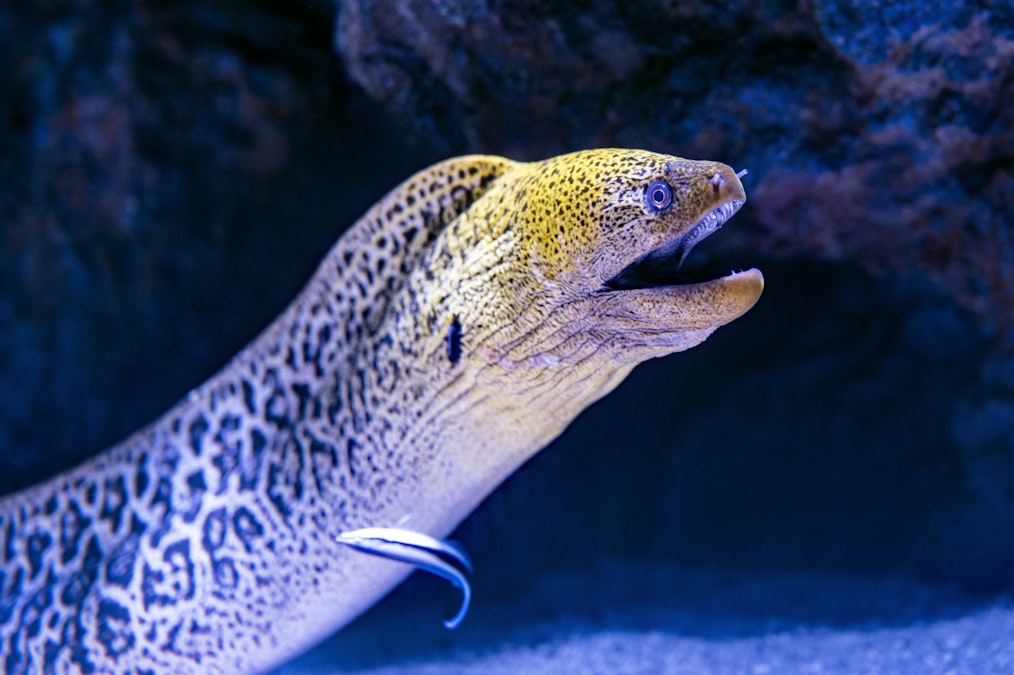
Somewhere in the murky shallows of the Amazon highlands, a two-and-a-half metre fish is doing something no human engineer has ever replicated at scale. Without wires, without a chemical reactor, without any external power source whatsoever, it charges itself from the inside — and when threatened, it releases that charge in a pulse so violent it can lock the muscles of a caiman (a South American relative of the alligator) completely rigid. The fish is Electrophorus voltai, the most electrically powerful creature ever measured on Earth.
What makes this more than a nature documentary curiosity is what researchers are now doing with the blueprint. From implantable medical devices to a startling discovery about wild gene transfer, the electric eel has become one of the most studied animals in bioelectronics.
Not One Species, But Three
For more than two centuries, scientists believed there was a single species of electric eel. In 2019, zoologist C. David de Santana and colleagues at the Smithsonian Institution divided the genus into three distinct species. E. voltai produces discharges up to 860 volts — named after Alessandro Volta, who invented the first battery in 1799, partly inspired by the biology of electric eels.
Key Facts
- →860 volts — peak discharge of E. voltai, the highest of any known animal
- →80% of the eel’s body is composed of electric organ tissue
- →100 millivolts per electrocyte cell — stacked in series to multiply voltage
- →5% of zebrafish larvae acquired DNA after exposure to eel discharge in wild study
A Battery Built From Muscle
The electric organs make up roughly 80 percent of the eel’s body, composed of disc-shaped cells called electrocytes, each holding a charge of around 100 millivolts. When the eel fires, a neural command cascades simultaneously through thousands of electrocytes arranged in series — the same principle as batteries wired end-to-end in a flashlight — their individual voltages adding together into a devastating pulse.
What Engineers Are Borrowing
Researchers at the National Institute of Standards and Technology modelled artificial cells based on electrocyte architecture and found that one optimised design could generate more than 40 percent more energy per pulse than a natural electrocyte. A stacked array in a cube slightly over four millimetres per side could produce continuous output of around 300 microwatts — sufficient to drive a small medical implant.
The Finding Nobody Expected
In late 2023, Nagoya University researchers showed that eel discharges can perform electroporation on surrounding organisms — transferring environmental DNA into living fish larvae. Five percent of exposed zebrafish larvae acquired a fluorescent marker gene.
The eel may not just be hunting with its electricity — it may be rewriting the genome of its entire ecosystem.
Nagoya University, 2023 — PeerJ
What This Means For The Future
Engineers have spent 225 years building batteries inspired by this animal. As bioelectronic medicine moves toward devices that need to live inside the body for decades, the eel’s architecture offers something no synthetic chemistry has matched: a power system made of the same stuff as the body it inhabits, self-repairing, metabolically sustained, and exquisitely controllable.
Sources: de Santana et al., Nature Communications (2019) · Sakaki et al., PeerJ (2023)