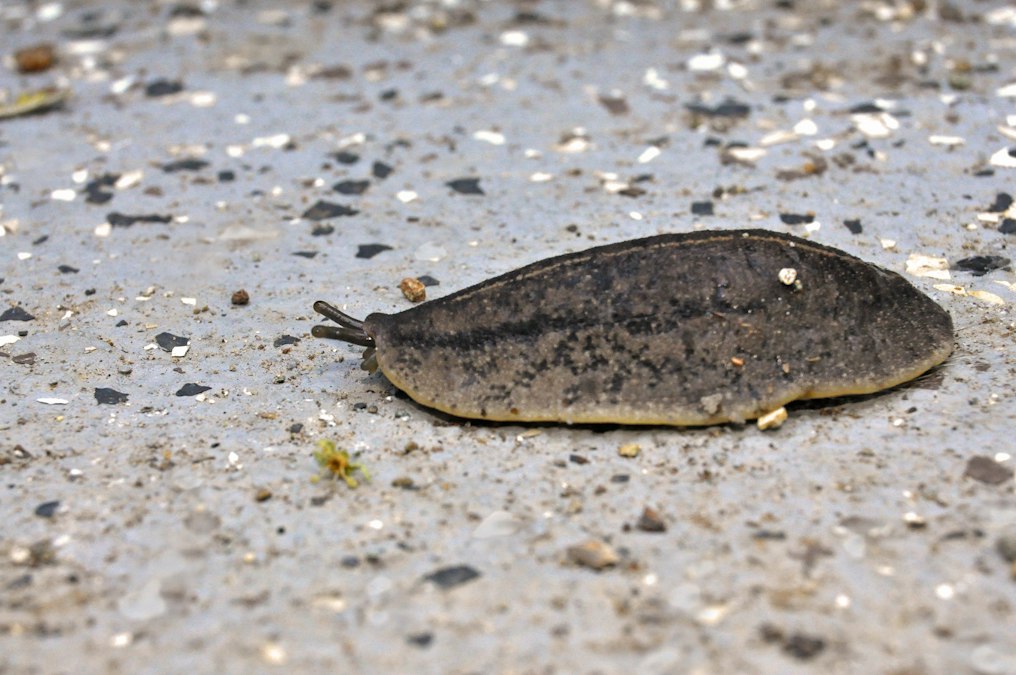
Cut a planarian flatworm into three pieces and you don’t get three dead fragments. You get three worms. The head end regrows a tail. The tail end regrows a head. The middle piece regrows both. Thomas Hunt Morgan documented versions of this in the 1890s and eventually showed that a fragment as small as a few hundredth of the animal’s total body could still rebuild a complete worm, head, gut, brain, and all. What Morgan couldn’t explain, and what biologists have only started to resolve in the last two decades, is how a blob of a few thousand cells in the middle of a severed body “knows” which end needs a head and which needs a tail.
The answer, worked out largely in Michael Levin’s lab at Tufts University using species like Dugesia japonica and Schmidtea mediterranea, is that the cells are reading a voltage map. Before any new tissue forms, the wound site and the tissue around it carry a distinct pattern of electrical charge across cell membranes, a gradient that runs head to tail along the body. Change that gradient with drugs that block the channels and junctions responsible for it, and you don’t just slow regeneration down. You change what the worm decides to build.
A flatworm with a wound doesn’t start from scratch, it starts from a voltage reading
Planarians owe their regenerative talent to neoblasts, a population of adult stem cells that make up a notable fraction of their body and are the only cells in the animal still capable of dividing. When you cut a planarian, neoblasts near the wound proliferate and form a blastema, the undifferentiated mass of cells that will become new tissue. For a long time the assumption was that genetic and biochemical signaling, growth factors, gradients of gene expression, would be enough to explain how that blastema decides to become a head instead of a tail.
That assumption doesn’t survive contact with the data. Work out of the Levin lab, building on earlier studies of planarian gap junctions by Taisaku Nogi and Levin in the mid 2000s, showed that disrupting electrical coupling between cells changes anatomical outcome independent of any genetic mutation. Gap junctions are the direct channels, made of proteins called innexins in invertebrates, that let adjacent cells share ions and small molecules, effectively wiring groups of cells into a shared electrical circuit. Block those junctions at the wound site with a drug like octanol, and the worm’s cells lose access to the long-range voltage information that normally tells them where they sit on the head to tail axis.
The shape of the worm isn’t written only in its genome. It’s dialed in by voltage.
A separate set of experiments, published by Wendy Beane, Junji Morokuma, Dany Adams, and Levin in 2011, pinned down one of the molecular sources of that voltage. They found that an H,K-ATPase pump, the same family of proton pump targeted by acid reflux drugs in humans, builds a resting potential gradient across the wound within hours of amputation, well before any new structure is visible. Block that pump with a drug like SCH-28080 and head regeneration fails or gets redirected, even though every gene the worm needs to build a head is still sitting in its genome, untouched.
Two heads, no new genes, and the pattern keeps copying itself
The experiment that made the rest of developmental biology pay attention to bioelectricity is the two-headed worm. Oviedo, Morokuma, and colleagues in Levin’s lab, in a 2010 paper in Developmental Biology, showed that disrupting gap junctional signaling at the time of cutting doesn’t just blur the head-tail decision, it can flip it outright at one end, producing a worm with a fully formed head on both sides of its body and no tail at all.
That alone would be a strange but containable result. What made it harder to explain away is what happened next. Cut one of those two-headed worms again, weeks or months later, with no drug treatment at all, and it doesn’t regenerate back to normal. It produces more two-headed worms. The altered body plan propagates through repeated rounds of amputation and regeneration as if it were the worm’s default setting, even though nothing about the DNA sequence changed and the chemical that caused the original disruption is long gone from the tissue.
Two heads, no new genes. Just a different voltage pattern, copied forward through every cut.
Levin’s group has argued that what’s being inherited here isn’t genetic at all. It’s a stable state in the bioelectric network itself, the pattern of resting potentials and gap junction connectivity that the worm’s cells read as “this is what a normal body looks like here.” Disrupt that pattern early enough and thoroughly enough, and you don’t damage the worm’s genome, you rewrite its reference copy of its own anatomy. Every future wound gets rebuilt against the new, two-headed blueprint instead of the old one.
Think of it less like a genetic switch and more like a thermostat holding a setpoint
The analogy researchers in the field reach for most often is a thermostat. A thermostat doesn’t store the number 68 in its mechanical parts the way a gene stores a protein sequence. It stores it as a relationship, a feedback loop that keeps pushing the system back toward a target state whenever something displaces it. The bioelectric gradient across a planarian’s body seems to work the same way. Gap junctions link cells into something like an electrical network, and the stable voltage pattern that network settles into functions as a kind of target state. Wound the tissue, and the network doesn’t just react locally, it tries to rebuild toward whatever target pattern it currently holds.
That reframes what a blastema is doing. It’s not simply following a preprogrammed genetic script for “build a head here.” It’s reading an electrical signal that specifies position and identity, the way a thermostat reads a temperature rather than executing a fixed sequence of furnace commands regardless of conditions. Change the setpoint, and the system keeps rebuilding toward the new one, stably, indefinitely, without anyone touching the setpoint again.
Here’s the honest complication, though, and it’s worth sitting with rather than glossing over. Nobody has a full account of how a voltage gradient, which is a fairly crude, low-resolution signal, gets translated into the extraordinarily specific instructions needed to build a planarian brain, pharynx, and eyespots in the right place relative to each other. Bioelectric state clearly sits upstream of the decision, head or tail, one head or two, but the handoff from “voltage pattern” to “detailed gene expression program building a specific organ” still runs through a lot of molecular steps that are only partly mapped. Critics of the bioelectric framing have made the point that correlation between voltage changes and anatomical outcome doesn’t by itself prove the voltage pattern is the information carrier rather than a downstream readout of some other signal that changed at the same time. The gap junction and ion pump experiments go a long way toward addressing that by directly manipulating the electrical state and getting a specific, predictable anatomical result, but it’s a young enough area of biology that the full causal chain, voltage to gene expression to form, is still being filled in piece by piece.
| Manipulation | Target | Anatomical result | Source |
|---|---|---|---|
| Octanol / innexin disruption | Gap junctional coupling | Two-headed worms, heritable through later amputations | Oviedo et al, Developmental Biology, 2010 |
| SCH-28080 / ouabain | H,K-ATPase pump, resting potential | Failed or redirected head regeneration | Beane, Morokuma, Adams, Levin, 2011 |
| Innexin expression knockdown | Gap junction protein synthesis | Loss of normal anterior-posterior polarity cues | Nogi and Levin, Developmental Biology, 2005 |
Why a flatworm’s wiring problem is actually a mammal’s wiring problem too
You might reasonably ask why any of this matters outside of flatworm biology. Planarians regenerate so aggressively, with neoblasts capable of rebuilding an entire nervous system from scratch, that it’s tempting to file this under biological trivia, a party trick specific to animals that are mostly stem cells wearing a worm costume. Humans don’t have neoblasts. We don’t regrow heads.
But the electrical logic underneath the trick isn’t exotic. Every animal cell maintains a resting membrane potential using the same basic toolkit of ion channels and pumps that planarians use, and gap junctions wire together epithelial and other tissues in vertebrates the same way innexins wire together planarian tissue. Levin’s group and others have gone on to show versions of voltage-based patterning control in frog embryos, including redirecting eye formation to ectopic locations on a Xenopus tadpole by altering ion channel activity in cells that had nothing to do with eye development genetically. The specific trick, flipping a head-tail decision through gap junctions, is a planarian story. The general principle, that bioelectric state carries positional and identity information that sits upstream of and partially independent from gene expression, looks like it applies well beyond flatworms.
That’s the reason bioelectricity researchers keep circling back to planarians even though the eventual applications they care about, directing wound healing, suppressing tumors, maybe one day coaxing a mammalian limb bud to do more than scar over, live in very different animals. The flatworm is the system where the electrical code is readable and reversible enough to prove the principle cleanly. It’s the control panel biologists can actually get their hands on.
What the worm can’t tell you
The honest limitation sits right at the edge of the thermostat metaphor. A thermostat’s setpoint is a single number. A planarian’s target morphology includes a brain, a gut, muscle, pigment, and sensory structures, all positioned correctly relative to each other, and the bioelectric gradient that stores “head versus tail” doesn’t, by itself, specify that level of anatomical detail. Something downstream is translating a coarse electrical instruction into fine-grained developmental outcomes, and that translation layer, how voltage differences get converted into the gene expression programs that actually build an eyespot in the right spot, is still mostly a black box. Researchers have real, reproducible control over the big binary decisions, how many heads, which end is which, but nobody can yet write an arbitrary target shape into a planarian’s bioelectric state and get that exact shape out the other end.
That gap is exactly why the field keeps running the same category of experiment over and over, in slightly different species and with slightly different channel targets, rather than declaring victory. The two-headed worm proved that anatomical memory can live in a bioelectric network instead of a genome. It didn’t prove that researchers understand that memory well enough to write new instructions into it on purpose.
What the planarian experiments leave behind is a genuinely uncomfortable question for anyone who thinks of the genome as the sole blueprint for a body. Cut one of Levin’s altered worms a hundred times over a year and it will keep rebuilding two heads, with a completely ordinary genome sitting in every one of its cells the whole time. The instructions for “normal” were still in there. The worm just stopped reading them, because something else, a pattern of voltage held stable across a network of electrically coupled cells, was telling it something different. The open question isn’t whether that kind of memory exists. It’s how much of the rest of biology, including the parts that don’t regenerate at all, is already running on the same principle without anyone having found the right wound to ask it.
Credit: Karl Callwood on Unsplash