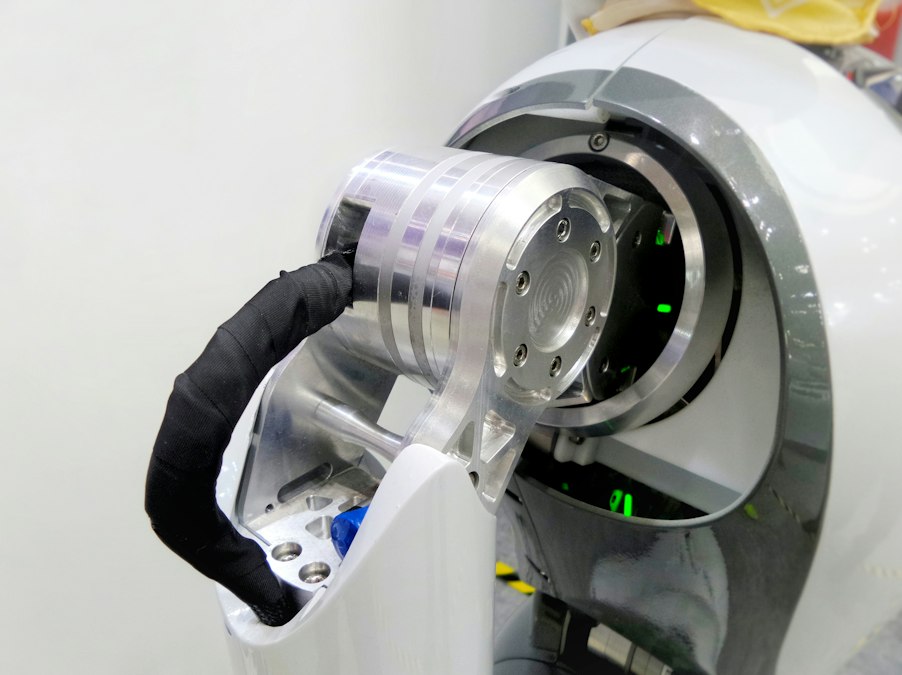
In 2011, Kevin Tracey stood in front of a room of researchers at the Feinstein Institutes for Medical Research and gave the field a name it didn’t have before: bioelectronic medicine. He’d already spent over a decade showing that stimulating the vagus nerve could suppress inflammation as reliably as a drug, without the drug. The name stuck because the idea needed one. Electroceuticals, the devices built on that idea, aren’t a future technology. They’re already implanted in hundreds of thousands of people, quietly doing jobs that used to belong to pills.
I want to be blunt about what’s actually true here, because the marketing around this space has gotten ahead of the evidence in some corners and lagged embarrassingly behind it in others. Vagus nerve stimulation for epilepsy has been FDA approved since 1997. Deep brain stimulation for Parkinson’s since 2002. Hypoglossal nerve stimulation for obstructive sleep apnea since 2014. These aren’t experimental curiosities. They’re standard of care for specific patients, covered by insurance, implanted by neurosurgeons who do it as routine work. At the same time, some of the biggest corporate bets in this space have collapsed, and the industry has learned some hard lessons about the gap between “a nerve controls this organ” and “we can control that nerve precisely enough to matter.”
The Vagus Nerve Turned Out to Be a Control Panel, Not a Wire
Tracey’s original finding, published from his lab in the late 1990s, was that rats with severed vagus nerves produced far more TNF-alpha, the inflammatory signaling molecule, when challenged with endotoxin than rats with intact nerves. Stimulate the vagus, inflammation drops. Cut it, inflammation runs unchecked. That single mechanism, the inflammatory reflex, became the foundation for an entire category of devices.
SetPoint Medical built a vagus nerve stimulator specifically for rheumatoid arthritis on top of that mechanism, running trials that showed meaningful symptom reduction in patients who had already failed multiple biologic drugs. That’s the population that matters here. These aren’t patients choosing electricity over ibuprofen. They’re patients for whom the pharmaceutical options ran out. LivaNova’s older VNS system already had FDA approval for epilepsy and for treatment-resistant depression, and electroCore’s gammaCore, a noninvasive version worn against the neck, got FDA clearance for migraine and cluster headache in the late 2010s. Different diseases, same nerve, same underlying bet: that you can dial inflammation and neural excitability up or down from one anatomical location.
A drug floods the whole body. An electrode finds one nerve and stops.
That’s the pitch, and it’s a real advantage. Systemic drugs for autoimmune disease carry infection risk, cancer risk, and a laundry list of side effects because they suppress immune function everywhere, not just where the disease is active. A stimulator sitting on the vagus nerve doesn’t touch the rest of the body’s defenses. It only works, though, because the vagus nerve happens to run to almost every organ system worth targeting. Not every disease has a nerve that convenient.
Closed-Loop Stimulation Is Where the Field Actually Got Smarter
The first generation of these devices was dumb in a specific way: they fired on a fixed schedule regardless of what the body was doing. Early VNS implants pulsed for thirty seconds every five minutes, all day, whether the patient needed it in that moment or not. Early DBS systems for Parkinson’s did the same thing to the subthalamic nucleus, all day, every day, burning battery and occasionally overshooting into side effects like dyskinesia or speech changes.
The shift toward closed-loop systems changed that math. Medtronic’s Percept device, cleared in the US in 2020, can sense the local field potentials in the brain, specifically the beta-band oscillations that correlate with Parkinsonian symptoms, and adjust stimulation in response rather than running blind. The device reads the brain before it talks to the brain. That’s a fundamentally different design philosophy from the first two decades of neurostimulation, and it’s the same philosophy driving responsive neurostimulation for epilepsy, where devices from NeuroPace detect the electrographic signature of a seizure starting and stimulate before it spreads, rather than stimulating constantly and hoping.
The device reads the brain before it talks to the brain.
This matters more than it sounds like it should. A stimulator that only fires when needed uses less energy, which means fewer surgeries to replace batteries, which means less risk to the patient over a lifetime of treatment. It also tends to produce fewer side effects, because you’re not marinating a nerve or a brain region in current it doesn’t need at 3am. The pattern across bioelectronic medicine over the last decade has been a steady migration from “stimulate constantly” toward “stimulate exactly when the biology asks for it.” That’s a harder engineering problem, and it’s also the actual frontier, more than any single new implant location.
Spinal Stimulation Restored Something Drugs Never Could
Grégoire Courtine’s group at EPFL, working with colleagues including Jocelyne Bloch, has spent years using targeted epidural electrical stimulation of the spinal cord to help people with severe spinal cord injuries stand and walk again. The STIMO trial results, published through the mid to late 2010s and refined since, showed paralyzed patients regaining voluntary control of leg muscles when the stimulation was timed to match the natural rhythm of walking, delivered through electrode arrays placed over specific spinal segments. Courtine’s team spun the work out into Onward Medical, which has continued pushing toward a commercial system.
No drug does this. There’s no pharmacological pathway that reconnects a severed communication line between brain and legs. What the stimulation does is take advantage of spinal circuitry below the injury site that’s still alive and capable of generating stepping patterns, and it excites that circuitry at the right moments to make voluntary movement possible again. It’s not a cure for the injury. Patients still need the device on to walk, in most cases, though some have shown improvement in unassisted movement after extended training with the system active. That distinction, treatment versus cure, is one the field needs to be honest about, because it’s easy to let the drama of a patient standing up obscure how much ongoing hardware dependency is baked into the result.
The Corporate Graveyard Tells You Where the Real Difficulty Is
Not everything in this space has worked. GSK and Verily launched Galvani Bioelectronics in 2016 as a joint venture specifically to commercialize bioelectronic treatments for chronic diseases, betting hundreds of millions on the idea that the vagus nerve inflammatory pathway could be turned into a broad platform the way small-molecule drugs became a platform in the twentieth century. GSK significantly scaled back its involvement years later, and the partnership’s ambitions shrank considerably from the original vision. The problem wasn’t that the biology was wrong. It’s that peripheral nerves are bundles of thousands of fibers doing different jobs, and getting an electrode to talk to only the fibers you want, at the amplitude you want, without also triggering fibers that control heart rate or swallowing or breathing, turned out to be a much harder selectivity problem than anyone budgeted for.
| Device / Target | Condition | Status |
|---|---|---|
| VNS (Cyberonics/LivaNova) | Epilepsy | FDA approved, 1997 |
| DBS, subthalamic nucleus (Medtronic) | Parkinson’s disease | FDA approved, 2002 |
| VNS (LivaNova) | Treatment-resistant depression | FDA approved, 2005 |
| Hypoglossal nerve stimulator (Inspire Medical) | Obstructive sleep apnea | FDA approved, 2014 |
| Percept closed-loop DBS (Medtronic) | Parkinson’s disease | FDA cleared, 2020 |
| gammaCore (electroCore) | Migraine, cluster headache | FDA cleared, 2018 |
| VNS (SetPoint Medical) | Rheumatoid arthritis | Clinical trials |
| Epidural spinal stimulation (Onward Medical) | Paralysis from spinal cord injury | Clinical trials, EU approval sought |
Calling This “Drug-Free” Undersells What It Actually Costs
Here’s my disagreement with the way this field gets sold. “Drug-free” implies electroceuticals are risk-free or maintenance-free, and neither is true. A VNS implant is a surgery, with the ordinary risks of surgery: infection, nerve damage from the implantation itself, anesthesia risk. Batteries fail and need replacing, which means another surgery years later. Leads can migrate or fracture. None of this shows up in a headline that says “no side effects, no chemicals,” and it should, because the honest comparison isn’t drugs versus nothing. It’s the side effect profile of a molecule circulating through the bloodstream versus the side effect profile of implanted hardware sitting against a nerve for a decade. Both have costs. They’re just different kinds of costs, and patients deserve to have both spelled out rather than one side getting the halo treatment.
The counterargument, and it’s a fair one, is that for the sickest patients, the ones who’ve already burned through biologics or anticonvulsants or antidepressants without relief, a surgical risk taken once is a much better trade than a lifetime of systemic drug exposure with unclear long-term consequences. That’s probably right for the populations these devices currently target. It stops being obviously right the moment companies start pitching these systems at broader, healthier populations where the drug alternative is milder and the surgical risk is the same.
Where the Actual Frontier Sits Right Now
The next real gains in this field aren’t going to come from finding new nerves to stimulate. They’re going to come from selectivity: electrodes and stimulation waveforms precise enough to activate only the specific fiber types responsible for a given effect, leaving the rest of a mixed nerve bundle alone. That’s the unsolved engineering problem behind Galvani’s stalled ambitions, and it’s the same problem researchers working on fascicle-selective cuff electrodes and kilohertz-frequency nerve block techniques are chipping away at in labs right now. Solve that, and a single implant on the vagus nerve could plausibly do the work of several different drugs, switched on and off by the electronics rather than by which pill the patient swallowed that morning.
Electroceuticals aren’t replacing the pharmacy. They’re carving out a specific, growing set of conditions, epilepsy, treatment-resistant depression, sleep apnea, Parkinson’s, certain autoimmune diseases, spinal cord injury, where anatomy gives you a more precise lever than chemistry ever could. The honest framing isn’t “drug-free medicine is here.” It’s that medicine now has two toolkits instead of one, and the interesting question for the next decade is how many diseases actually have a nerve worth finding.