Photo via Unsplash
In 2020, researchers at the University of Vermont and Tufts University announced the creation of xenobots—the first living machines assembled from biological cells. Built from stem cells harvested from African clawed frog (Xenopus laevis) embryos, these millimeter-scale organisms were designed by an evolutionary algorithm, assembled by microsurgery, and demonstrated behaviors no prior engineering framework could have predicted from the properties of their component cells. They move. They heal themselves. And in 2021, researchers reported that they can reproduce—not through any biological mechanism their ancestor frogs possess, but through a fundamentally new form of kinematic self-replication that had never been observed in any living system.
Designing Life From Scratch
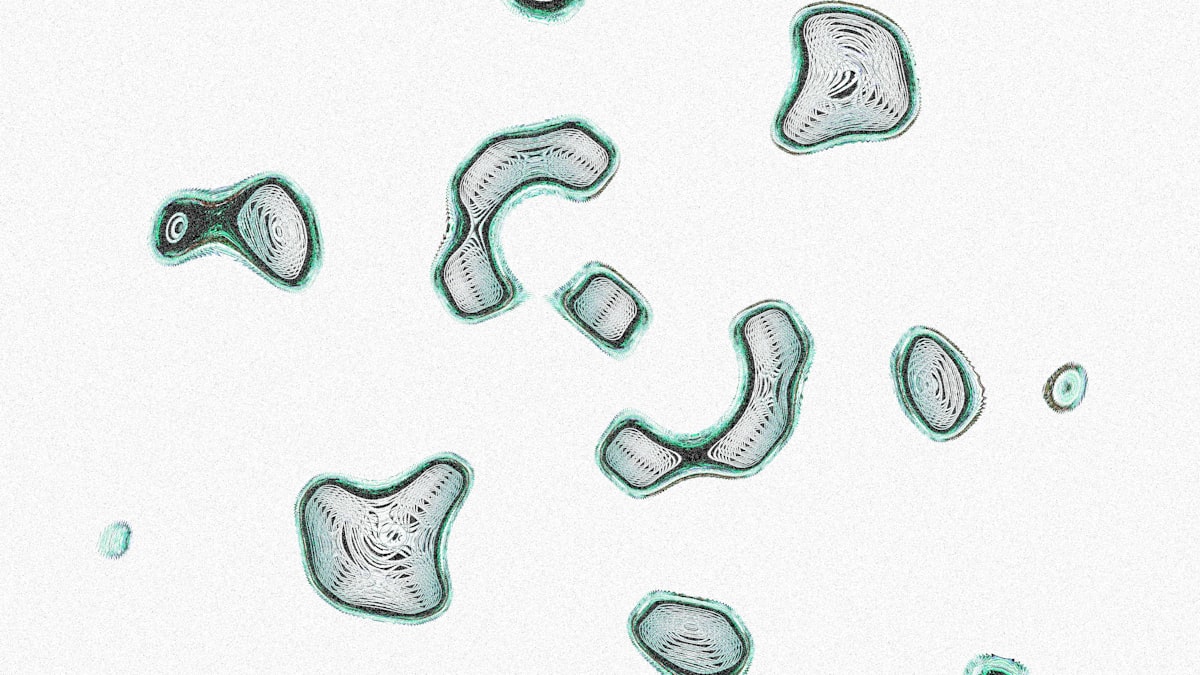
The xenobot project began with a question: if you give an AI system the physical properties of frog skin and cardiac muscle cells, and ask it to design an organism optimized to move in a specific direction, what does it create? The answer was not a frog-like structure. The evolutionary algorithm, given thousands of computer-simulated generations to explore the space of possible cell arrangements, converged on designs that looked nothing like any known animal—asymmetric, often C-shaped or boot-shaped assemblies that harnessed the spontaneous contractions of cardiac muscle cells to generate directed locomotion.
Translating these designs into physical organisms required microsurgical assembly of individual cells—a painstaking process performed under microscopes with hair-thin tools. The resulting xenobots, roughly half a millimeter in diameter, moved through water at speeds of up to a centimeter per minute. They navigated around obstacles, congregated in groups, and in some configurations pushed small objects into piles—a behavior the researchers had not programmed but that emerged from the physics of many mobile bodies interacting in a confined space.
The xenobots’ ability to self-heal was immediately apparent. When cut in half, they fused back together and resumed normal behavior within hours. This resilience does not reflect any specialized repair mechanism; it is simply the default behavior of embryonic cells finding adjacent cells to adhere to. The insight is important: many of the most striking properties of living systems emerge not from elaborate biological programs but from the physical properties of cells operating according to their intrinsic rules in structured environments.
Kinematic Self-Replication: A New Form of Life
The xenobots’ most startling capability was reported in November 2021. Researchers placed parent xenobots in a solution containing loose frog stem cells and observed that the xenobots spontaneously gathered the loose cells into piles. Left undisturbed, some of these piles organized into new xenobots—smaller versions with similar motility to the parents. These offspring could, in turn, gather cells and initiate a third generation, though the process decayed in efficiency over successive rounds.
The mechanism is not genetic replication. Xenobots contain the same DNA as the frog cells they were made from, and they do not pass this DNA to their offspring in any specially organized form. The replication is kinematic—driven by the physical motion and adhesive properties of the organisms rather than by information transfer through nucleic acids. This is precisely the kind of self-replication that some origin-of-life theorists have proposed as a plausible precursor to genetic life: physical structures that organize their environment to produce copies of themselves, before the evolution of dedicated reproductive molecular machinery.
The geometry of the replication turns out to be critical. Parent xenobots with the C-shaped architecture favored by the evolutionary algorithm were significantly more efficient at gathering cells into replication-competent clusters than spherical xenobots of the same cell number. This shape dependence—the fact that the topology of the organism determines its reproductive fitness in a non-genetic environment—is a direct experimental demonstration of a principle that had previously existed only in theoretical models of proto-life.
Bioelectricity and the Future of Living Machines
Xenobots occupy a conceptual territory that existing biological and engineering frameworks struggle to describe. They are not robots in any conventional sense—they have no rigid components, no electronics, no programmed logic. They are not animals—they have no nervous system, no immune system, no evolutionary history as organisms. They are, as their creators propose, a new category: a programmable living system whose behavior emerges from the interaction of cell-level physics with computational design.
The bioelectricity of xenobots is implicit rather than explicit. Cardiac muscle cells generate action potentials that drive contraction; the coordinated bioelectrical activity of these cells is what powers xenobot locomotion. Future work may involve engineering xenobots with more sophisticated bioelectrical properties—incorporating neurons, sensory cells, or cells engineered to respond to specific electrical stimuli—to create living machines that respond to environmental cues or carry out targeted tasks in biological tissue. The applications most often discussed include drug delivery to specific sites in the body, surgical microrobotics, and environmental bioremediation. Each requires solving the challenge of controlling living systems precisely enough to direct their behavior toward a defined goal—a challenge that is fundamentally a problem of bioelectrical engineering.
What Xenobots Tell Us About Life’s Definition
The xenobot experiments have prompted philosophers and biologists to revisit the definition of life itself. Xenobots satisfy most traditional criteria: they move, they respond to their environment, they have a metabolic activity sustained by cellular processes, and they can reproduce. They do not evolve in the traditional sense—their reproduction is imperfect and decays over generations. They will not persist in the wild. But their existence demonstrates that the transition between non-life and life is not a sharp threshold but a continuum, and that novel forms of life-like organization can emerge from the same cellular components that make up conventional organisms when those components are arranged differently. The xenobot is not a curiosity—it is a proof of concept for the programmability of life’s organizational principles, and a first demonstration that the space of possible living systems extends well beyond what evolution has explored.
Xenobots raise an important philosophical question about the definition of life. They satisfy most classical criteria: movement, metabolism, environmental response, and a form of reproduction. Yet they will not persist in the wild, do not evolve, and exist only because of deliberate human assembly. Their creation demonstrates that the boundary between living and non-living systems is not a sharp threshold but a continuum of organization, and that the space of possible living configurations is far larger than the space evolution has actually explored. As tools for assembling and programming cells improve, the conceptual category of “living machine” will expand—and the ethical, regulatory, and scientific frameworks for thinking about such entities will need to expand alongside it.
Sources and Further Reading
- Kriegman, S. et al. (2020). A scalable pipeline for designing reconfigurable organisms. PNAS, 117(4).
- Kriegman, S. et al. (2021). Kinematic self-replication in reconfigurable organisms. PNAS, 118(49).
- Levin, M. (2022). Technological approach to mind everywhere: an experimentally-grounded framework for understanding diverse bodies and minds. Frontiers in Systems Neuroscience.