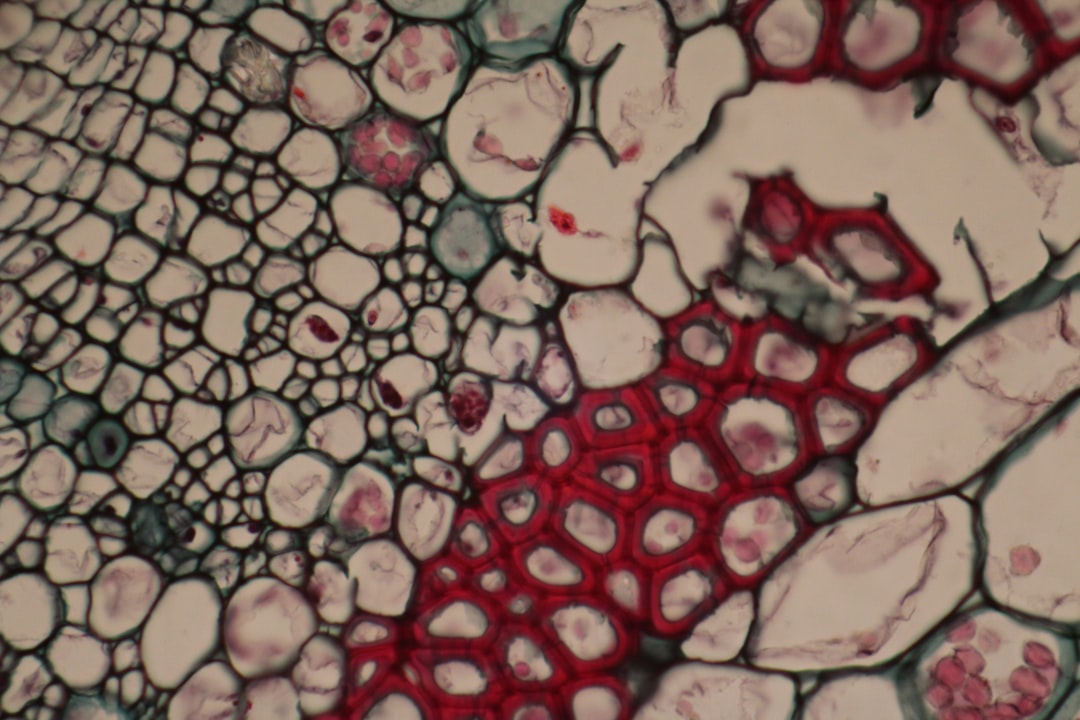
What if your body could manufacture its own medicine — not from a pill or an injection, but from a living cell you engineered to do exactly that job? This is no longer a thought experiment. It is the operational premise of a research field that sits at the intersection of synthetic biology, bioelectricity, and therapeutic design.
Researchers are building cells that detect disease signals and respond by synthesizing the precise therapeutic molecule needed — at the site of action, in real time, at the dose the body actually requires. The implications are staggering, not just medically but philosophically. The boundary between organism and device is dissolving.
The Logic Gate Cell
The core engineering challenge is specificity. A therapeutic cell that fires indiscriminately is worse than useless — it’s dangerous. So synthetic biologists have spent the better part of two decades developing cellular logic: genetic circuits that evaluate multiple inputs before committing to an output.
These are not metaphorical logic gates. They are literal Boolean operators implemented in DNA. An AND gate requires two molecular signals to be present simultaneously before triggering a response. A NOT gate suppresses output when an inhibitory signal is detected. An OR gate fires if either of two inputs is present. By combining these elements, researchers can build cells that only activate in highly specific molecular environments — the kind of environments that exist inside a tumor, or at a site of chronic inflammation, but nowhere else in the body.
The 2011 work from Ron Weiss’s lab at MIT demonstrated that engineered mammalian cells could execute multi-input logic to classify cancer cells with high precision. That proof of concept opened a decade of refinement. Today, CAR-T cells — chimeric antigen receptor T cells — represent the first generation of approved living medicines. They are, at their core, logic gate cells: engineered to recognize a specific antigen and kill only cells displaying it.
Where Bioelectricity Enters
Chemical signaling gets most of the attention in synthetic biology, but bioelectricity is increasingly understood as a parallel and often faster signaling layer. Ion channels and membrane voltage gradients don’t wait for protein synthesis or second-messenger cascades. They operate on millisecond timescales, propagating information across tissues the way a wire propagates current.
Michael Levin’s work at Tufts has been central to expanding this understanding. His lab has demonstrated that resting membrane voltage patterns encode positional information during development — and that manipulating those patterns can redirect cellular identity. A cell that would have become skin can be reprogrammed toward neural fate by altering its bioelectric state. A wound that would heal imperfectly can be guided toward regeneration by restoring the correct voltage gradient.
For programmable medicine, this matters enormously. Bioelectric signals are now being explored as both inputs and outputs for engineered cellular systems. A cell could be designed to detect an abnormal voltage signature — the kind associated with tumor margins or degenerating neural tissue — and respond by releasing a therapeutic payload. Conversely, engineered cells could be programmed to emit specific bioelectric signals, instructing surrounding tissue to change behavior.
This is the closed-loop model that researchers are working toward: a living system that senses, computes, and acts — continuously, autonomously, and with precision that no external delivery system can match.
Closed-Loop Therapeutics
The phrase “closed-loop” comes from control systems engineering. In a closed-loop system, the output feeds back into the input, allowing the system to self-correct. A thermostat is a simple closed-loop system. A pancreatic beta cell is a more sophisticated one — it monitors blood glucose and secretes insulin proportionally.
Synthetic biologists are now building artificial closed-loop systems with comparable sophistication. A 2021 study published in Science described engineered cells capable of monitoring inflammatory cytokine levels and releasing anti-inflammatory compounds in proportion to the signal detected — functioning, essentially, as an artificial immune regulator. When inflammation spiked, the cells responded. When it subsided, they stopped.
This kind of dynamic dosing is something conventional pharmacology cannot achieve. A pill delivers a fixed dose on a fixed schedule. It has no awareness of what the body actually needs at that moment. An engineered cell, by contrast, is a continuous sensing and response system. It doesn’t deliver medicine — it is the medicine.
The Hard Problems
Progress is real, but the obstacles are significant. Immune rejection remains the central challenge for cell-based therapies. Engineered cells must either be derived from the patient’s own tissue — expensive and time-consuming — or be designed to evade immune surveillance, which introduces its own risks.
Genetic stability over time is another concern. Engineered genetic circuits can drift through cell division, accumulating mutations that alter their behavior unpredictably. Cells that work correctly in vitro may not behave the same way after months inside a living body.
The bioelectric dimension adds further complexity. Endogenous ion channel expression varies between individuals, across tissues, and in response to disease states. An engineered cell calibrated to respond to a specific voltage signature may encounter a different electrical landscape in a real patient than it did in a lab model.
And then there is the regulatory question. These therapies are simultaneously drugs and devices and living organisms. No existing regulatory framework maps cleanly onto them. The FDA’s Office of Tissues and Advanced Therapies is developing approaches, but the science is advancing faster than the frameworks.
What Comes Next
The near term belongs to oncology. CAR-T and its successors — CAR-NK cells, TIL therapies, engineered macrophages — are expanding the range of cancers that respond to living medicines. Solid tumors, which have resisted cell therapy far more stubbornly than blood cancers, are the current frontier.
The medium term is likely to include metabolic and autoimmune diseases. Engineered cells for Type 1 diabetes — cells that sense glucose and secrete insulin, indefinitely, without external intervention — are in preclinical and early clinical stages at several research groups. Autoimmune conditions, where the body’s own signaling has gone wrong, are a natural target for bioelectrically-aware cellular therapies that can read and correct the underlying electrical dysfunction.
The long term is harder to see clearly, but the direction is not. The body is a programmable system. Its cells communicate in chemical and electrical languages that we are learning to read and write. The logical endpoint of that learning is medicine that doesn’t treat disease from the outside — it rewrites the conditions that allow disease to exist.
The body as its own pharmacist. Not metaphor. Trajectory.
Photo by John A Garrison Jr on Unsplash
Sources and Further Reading
- Fischbach, M.A. & Bluestone, J.A. (2013). Cell-based therapeutics: the next pillar of medicine. Science Translational Medicine, 5(179).
- Lim, W.A. & June, C.H. (2017). The principles of engineering immune cells to treat cancer. Cell, 168(4).
- Khalil, A.S. & Collins, J.J. (2010). Synthetic biology: applications come of age. Nature Reviews Genetics, 11.