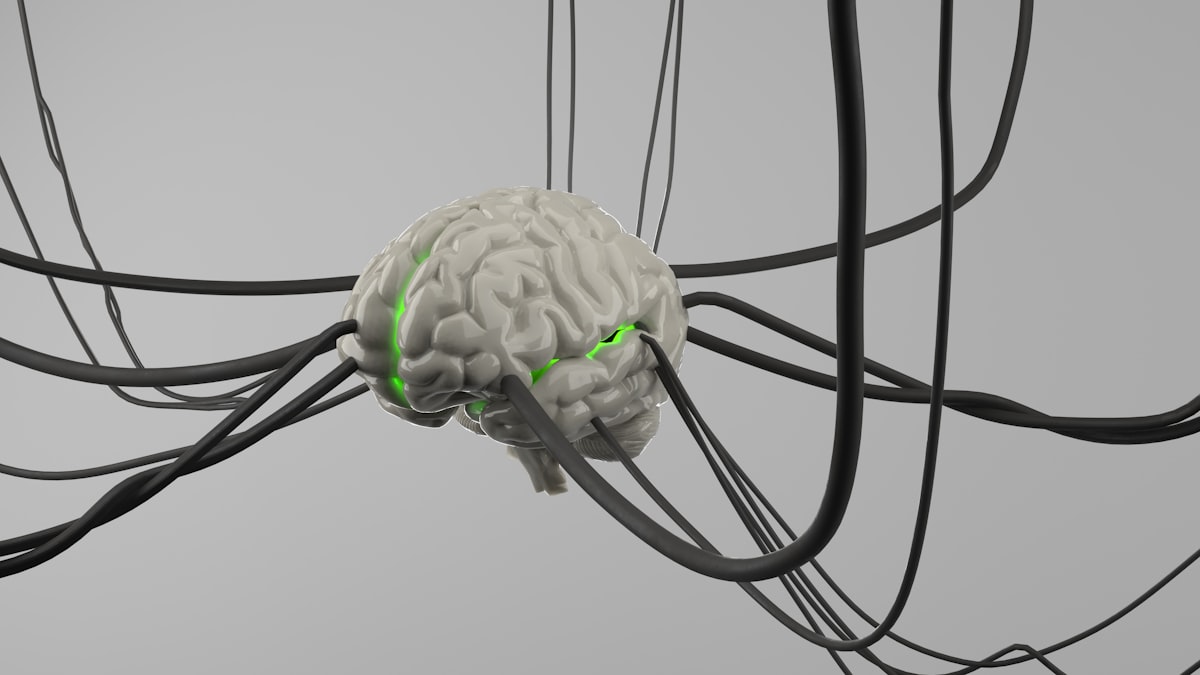
For eleven years, the most advanced implanted brain device on the American market needed a technician with a wand to talk to it. That device is NeuroPace’s RNS System, cleared in 2013 to detect and interrupt seizures from inside the skull, and it works well. But getting its data out means a clinic visit, a handheld programmer held near the scalp, and someone trained to read the download. The implant is autonomous. The relationship with the outside world is not.
That gap just narrowed. The FDA has cleared Synchron’s Stentrode system for unsupervised home use, the first neural implant that patients can operate day to day without a clinician present, a wand in the room, or a scheduled clinic download. Patients pair the implant to a tablet over Bluetooth the way they’d pair a set of wireless earbuds, and it stays connected. No craniotomy put it there in the first place. It went in through a vein.
The implant that never touched the brain surface
Synchron’s approach has always been the odd one out in brain-computer interfaces. Where Blackrock Neurotech’s Utah Array and Neuralink’s threaded electrodes go in through the skull, Stentrode goes in through the jugular vein. An interventional team threads a stent-like mesh of electrodes up into a blood vessel that runs alongside the motor cortex, and it sits there, recording electrical activity through the vessel wall. No craniotomy. No dural incision. The first human implant happened in 2019 at Royal Melbourne Hospital, where neurointerventional radiologist Peter Mitchell and colleagues placed the device in a patient with ALS as part of the SWITCH feasibility study. The first U.S. implant followed in 2022 at Mount Sinai, backed by an FDA investigational device exemption and years of animal work by Synchron cofounders Thomas Oxley and Nicholas Opie, who spun the company out of the University of Melbourne.
The pitch was always that avoiding open brain surgery would make the device something you could give to more people, sooner, with less risk. What the endovascular route actually bought, it turns out, is also regulatory. A device that never breaches the skull is an easier device to trust unsupervised in someone’s living room.
What “fully wireless” actually cleared, and what it didn’t
Here is the distinction that matters, and it is the one most coverage of this clearance will skip past. Stentrode reads brain signal. It does not deliver electrical therapy. The clearance lets a patient with severe paralysis, from ALS, brainstem stroke, or spinal cord injury, use the implant’s decoded signal to control a cursor, type, or operate assistive software at home, continuously, without a clinician verifying the connection first. It is a communication and control device. It is not a closed-loop stimulator making therapeutic decisions on its own in someone’s bedroom at 3 a.m.
The FDA will let an implant listen unsupervised well before it lets one act unsupervised.
That asymmetry is the real story. NeuroPace’s RNS stimulates, and it stays tethered to clinical oversight through its wand. Medtronic’s Percept PC, cleared in 2020 for Parkinson’s deep brain stimulation, senses brain activity and adjusts stimulation with clinician-set parameters, and its home app lets patients log symptoms and pull limited data, but full programming and full data review still happen in clinic. Every device on the market that pushes current into tissue on a schedule still keeps a clinician in the loop somewhere. Synchron got its wireless, unsupervised, home-use clearance by building a device that only listens.
Twenty years of implanted electronics tethered to the clinic
I have watched this field treat “wireless” as a marketing word for a decade while the actual data path stayed clinical. Cochlear implants stream audio wirelessly to an external processor, but programming happens in an audiologist’s office. Cardiac pacemakers have transmitted remotely to monitoring services since the 2000s, but that’s telemetry flowing out, not a patient operating the device’s core function independently. Deep brain stimulators for Parkinson’s and dystonia have gotten smaller, rechargeable, and app-connected, and every generation still assumes a clinic visit for anything beyond basic parameter nudges.
Twenty years of wireless marketing, and the data still had to go through a clinic to mean anything.
What changed with this clearance isn’t the electrode. It’s the assumption that a neural implant’s day-to-day function requires a professional intermediary. Synchron’s BrainOS software runs the decoding on the tablet side, continuously, and the patient (or a caregiver) manages the connection the way you’d manage a phone. If the pairing drops, you reconnect it. If it needs firmware attention, that happens over the same wireless link. Nobody drives to a hospital to keep the device working.
Where the market actually stands
| Device | Function | FDA status | Home operation |
|---|---|---|---|
| NeuroPace RNS System | Detects and stimulates to stop seizures | Cleared 2013 | Wand-based, clinic download required |
| Medtronic Percept PC | Senses and stimulates for Parkinson’s, dystonia | Cleared 2020 | App-assisted, clinician programming |
| Synchron Stentrode | Records motor cortex signal for device control | Cleared for home use | Bluetooth pairing, unsupervised |
| Neuralink | Records motor cortex signal via threaded electrodes | Investigational device exemption, active trial | Trial-supervised, not commercially cleared |
Neuralink’s threaded array can, in principle, do more than Stentrode’s vessel-mounted electrodes, in resolution if nothing else. But Neuralink is still inside an investigational trial, and its patients operate under study protocols, not a market clearance. Synchron got to the home first not because its device is more capable. It got there because its device asks the FDA to trust less.
The unsupervised stimulator is still the harder problem
The obvious counterargument is that a recording-only implant is the easy case, and it is. Nobody gets hurt if a decoding algorithm misreads an intended cursor movement. Somebody can get hurt if an unsupervised stimulator delivers current it shouldn’t, at a moment nobody caught it. That is why closed-loop vagus nerve stimulators for depression and inflammatory disease, and DBS systems that adjust their own parameters based on sensed brain state, are still built around clinical checkpoints even as the sensing and telemetry around them get lighter. The FDA’s caution there isn’t bureaucratic drag. It’s proportionate to what happens when a device that pushes current gets it wrong without anyone watching.
Kevin Tracey’s work on vagus nerve stimulation at the Feinstein Institutes, and the closed-loop bioelectronic therapies it inspired, made the case that stimulation can be more precise and more powerful than drugs at hitting a single circuit. That precision is exactly why regulators move slower on letting stimulators run themselves at home. A recording implant that mis-decodes a signal produces a typo. A stimulating implant that misfires produces a medical event.
What this clearance actually opens up
Practically, this means people with ALS, brainstem stroke, or high spinal cord injury can now get a Stentrode implant and use it as a permanent communication tool, not a research participation. That is a genuine quality-of-life shift for a population where losing speech and hand function often means losing independence over months, not years. It also means Synchron’s device is now competing less with other brain implants and more with eye-tracking and switch-based assistive technology, categories that have served this population for decades but with much lower bandwidth.
The regulatory precedent matters beyond Synchron. Every company building a sensing-only neural interface, whether for locked-in patients, prosthetic control, or eventually broader human-computer interaction, now has a cleared pathway to point to. The stimulating side of the field will not move nearly as fast, and it shouldn’t. The FDA just drew a clear line between an implant that listens and an implant that acts, and gave the listening kind a home. The acting kind is going to earn that trust one supervised trial at a time.