In 2011, a rheumatologist named Frieda Koopman at Amsterdam UMC began implanting a device the size of a vitamin capsule around the cervical vagus nerves of patients with rheumatoid arthritis who had run out of options. The patients she enrolled had already failed methotrexate. Most had failed at least one biologic drug, the injectable antibodies that block inflammatory proteins like TNF-alpha. Koopman’s device did not inject anything. It delivered electrical pulses, a few minutes a day, to a nerve that runs from the brainstem down through the neck into the chest and abdomen. The idea, borrowed from a decade of laboratory work by Kevin Tracey at the Feinstein Institutes for Medical Research on Long Island, was that the nervous system already contains a working anti-inflammatory circuit, and that rheumatoid arthritis might respond to electricity the same way it responds to a drug.
That 2011 pilot, published in 2016 in the Proceedings of the National Academy of Sciences with 17 patients, was small enough to dismiss as a curiosity. It wasn’t. More than a decade later, a far larger, multi-center, randomized, sham-controlled trial built on that same premise has reported results, and the signal has held. The company behind the device, SetPoint Medical of Valencia, California, says the trial, known internally as RESET-RA, met its primary endpoint: patients receiving active stimulation showed significantly greater improvement in disease activity than patients who underwent an identical surgical implant but received no real stimulation. For a field that has spent twenty years promising that electricity could replace or supplement immunosuppressive drugs, this is the closest thing yet to proof at scale.
A Reflex the Drug Industry Never Had a Name For
Rheumatoid arthritis is not a joint disease so much as an immune disease that happens to express itself in joints. The body’s own macrophages, the immune cells that patrol tissue and release inflammatory signals, overproduce cytokines like TNF-alpha, interleukin-6, and interleukin-1 beta. Those molecules recruit more immune cells, destroy cartilage, and erode bone. The biologic drugs that transformed RA treatment starting in the late 1990s, drugs like etanercept and adalimumab, work by intercepting those cytokines after the body has already made too many of them.
Tracey’s research took a different angle. In the late 1990s, studying sepsis rather than arthritis, his lab found that stimulating the vagus nerve suppressed TNF-alpha production throughout the body, while severing the nerve made inflammation worse. He called it the inflammatory reflex: a hardwired circuit in which the brain senses rising inflammation and responds by sending a signal down the vagus nerve to the spleen, where it triggers T cells to release acetylcholine. That acetylcholine binds to a receptor called alpha-7 nicotinic acetylcholine receptor on nearby macrophages, and binding that receptor tells the macrophage to stop manufacturing TNF-alpha.
Stimulate the vagus, dial down the inflammation. Cut the vagus, lose the brake.
The therapeutic logic follows directly from the biology. If a cytokine storm can be throttled by closing a neural loop, then a device sitting on that loop might do a drug’s job without the drug. SetPoint Medical was founded on that bet in 2007, built around a small electrode cuff that wraps directly around the cervical vagus nerve, connected to a pulse generator implanted in an outpatient procedure under local or general anesthesia. Unlike the vagus nerve stimulators long used for epilepsy, which run on a near continuous duty cycle, the RA device fires in short bursts, a few minutes at a time, once or twice a day. The target isn’t seizure suppression. It’s the spleen.
What RESET-RA Actually Tested
RESET-RA enrolled patients with moderate to severe rheumatoid arthritis who had already cycled through conventional synthetic DMARDs and, in many cases, one or more biologic or targeted synthetic drugs, at sites across the United States and Europe. Every patient underwent the implant surgery. That detail matters more than it might seem. In a sham-controlled device trial, the control group still goes under anesthesia and still has hardware placed in their neck. They simply don’t receive active stimulation during the blinded period. It is a far higher bar than a placebo pill, because patients, investigators, and the surgical teams involved all have to be blinded to who is actually receiving therapy.
Mark Genovese, a rheumatologist at Stanford who has been involved in SetPoint’s clinical program, has described the appeal of the approach to colleagues in terms of mechanism rather than novelty: a device that hits the cytokine cascade upstream, at the level of macrophage signaling, rather than downstream, at the level of a single circulating protein. The trial measured standard rheumatology endpoints, including ACR20 response, the threshold at which a patient shows at least a 20 percent improvement across a composite of swollen joints, tender joints, and patient-reported measures, along with DAS28-CRP, a continuous score combining joint counts with a blood marker of inflammation. SetPoint has reported that the active-stimulation arm showed a statistically significant separation from sham on these measures, enough to clear the trial’s pre-specified primary endpoint.
The control group still had the surgery. They just never got the electricity.
What the company has not claimed, and what independent rheumatologists will be watching for in the full peer-reviewed publication, is how this effect size compares to a biologic drug head to head. No trial has pitted vagus nerve stimulation directly against adalimumab or tocilizumab in the same patients. The honest comparison right now is indirect: a device that showed meaningful separation from a rigorous surgical sham, in a population that had already failed drugs designed to do the same immunological job.
How a Nerve Implant Stacks Up Against a Syringe
Every RA therapy on the market asks a patient to accept some tradeoff between convenience, durability, and risk. Biologics require either regular injections or infusions and carry an elevated risk of infection because they suppress circulating immune function broadly. JAK inhibitors, the newer oral drugs like tofacitinib, carry black-box warnings for cardiovascular events and blood clots that emerged only after years of post-marketing surveillance. A vagus nerve implant asks a patient to accept a one-time surgical risk in exchange for, potentially, freedom from both the needle and the pill bottle.
| Therapy | Mechanism | Administration | Regulatory status for RA |
|---|---|---|---|
| TNF inhibitors (adalimumab, etanercept) | Bind and neutralize circulating TNF-alpha | Self-injection, weekly to biweekly | FDA approved since the late 1990s |
| JAK inhibitors (tofacitinib, upadacitinib) | Block intracellular cytokine signaling enzymes | Daily oral pill | FDA approved, with boxed safety warnings |
| SetPoint vagus nerve implant | Activates cholinergic anti-inflammatory pathway to suppress macrophage cytokine release | One-time surgical implant, brief daily stimulation | FDA Breakthrough Device designation, pivotal trial reported |
The table flatters the implant in one obvious way and underplays it in another. Surgery is not nothing: it carries anesthesia risk, infection risk at the implant site, and the possibility of nerve irritation or voice changes if the cuff sits too close to the laryngeal nerve branches that run alongside the vagus in the neck. But for a patient who has failed three biologics and is being told the next option is a drug with a new set of cardiovascular warnings, a device that needs no refills and produces no systemic immunosuppression is a genuinely different kind of offer.
The Regulatory Path Still Runs Through the FDA, Not Around It
SetPoint’s device carries Breakthrough Device designation from the FDA, a status that speeds up review timelines for technologies addressing serious conditions without approved alternatives, but it does not guarantee approval. The company will need to submit the full RESET-RA dataset, including safety data on infection rates, lead migration, and any effects on heart rate or blood pressure, since the vagus nerve also regulates cardiac and gastrointestinal function. Historically, vagus nerve stimulators for epilepsy, made by companies like LivaNova, have an established safety record after more than two decades on the market, which gives regulators and surgeons a reference point for surgical risk even though the RA indication, stimulation pattern, and target population are different.
The broader bioelectronic medicine field has been here before and not quite closed the loop. GlaxoSmithKline backed SetPoint’s early research and later co-founded Galvani Bioelectronics with Verily in 2016 specifically to pursue this class of therapy, betting that modulating nerves could become a legitimate alternative to modulating molecules. Early device trials for RA and other inflammatory conditions have shown promising pilot data for years without translating into an approved product patients can actually get prescribed. RESET-RA is the first attempt at the scale, and with the blinding rigor, that a regulator would need to say yes.
If the full dataset holds up under peer review and FDA scrutiny, rheumatologists would gain something they have never had: a non-pharmacologic option for patients who have cycled through the entire biologic and JAK inhibitor toolkit and are still in pain. If it doesn’t, the inflammatory reflex will remain exactly what it has been since Tracey’s first sepsis experiments nearly three decades ago, a real and reproducible biological circuit still waiting for the clinical trial that turns it into medicine someone can actually prescribe.
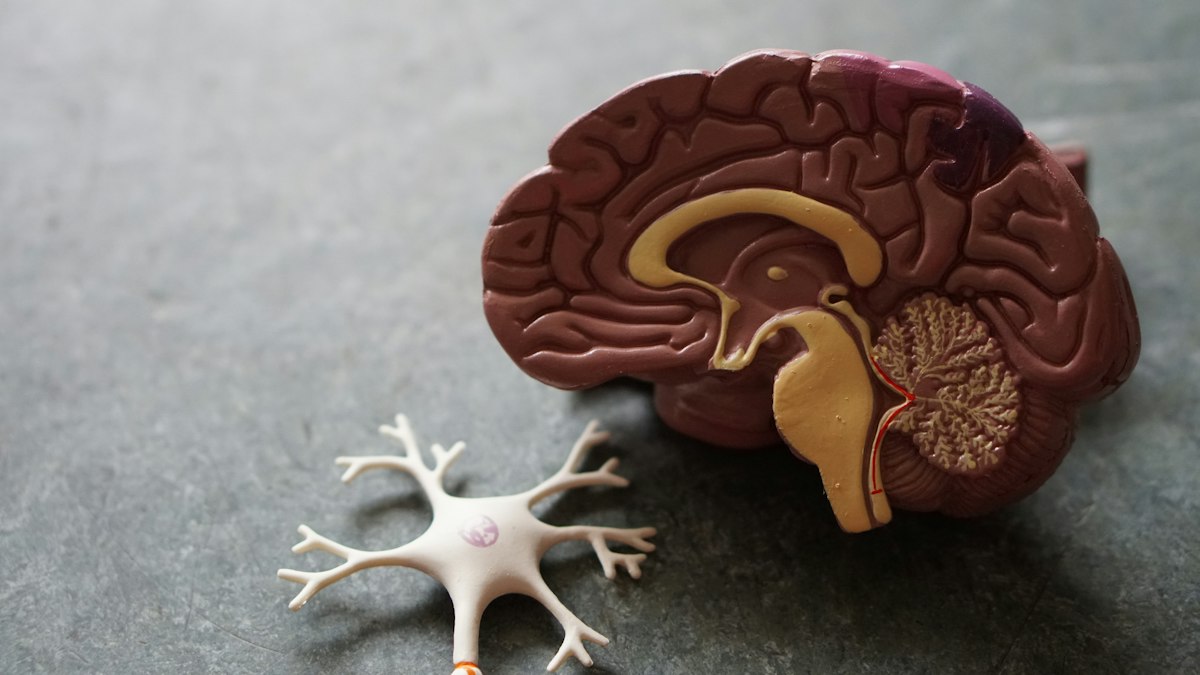
Credit: Robina Weermeijer on Unsplash