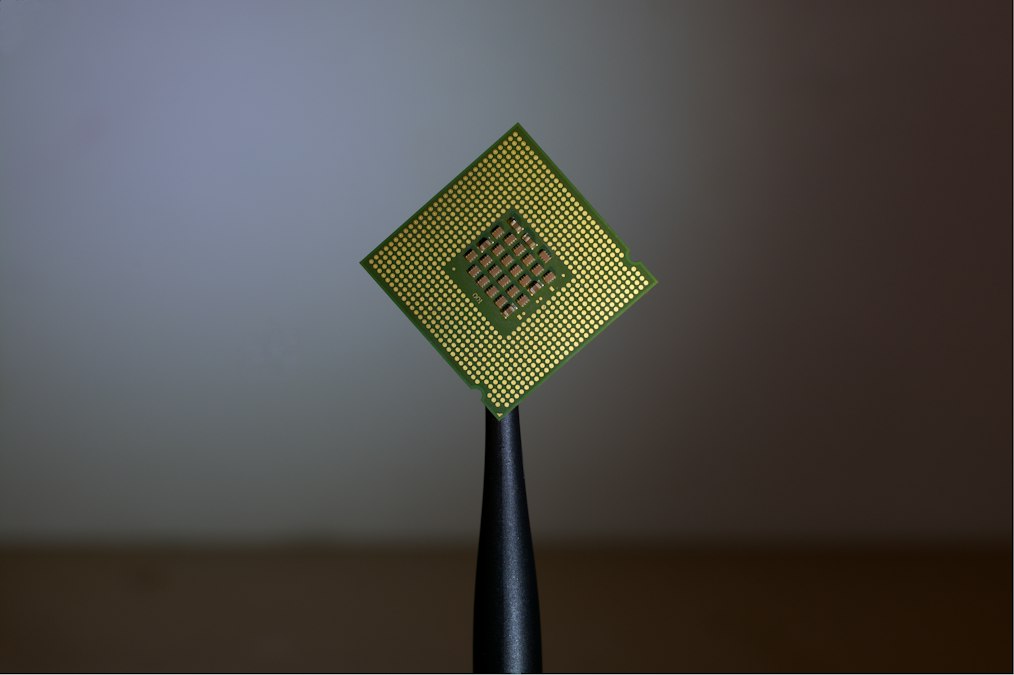
In Melbourne, a company called Cortical Labs has spent the past several years growing human neurons on top of silicon chips and teaching them to do things neurons were never asked to do before, like play Pong. Its newest claim, made public this year, is bigger and stranger: a neuron-silicon hybrid system solving certain logic puzzles roughly 40 times faster than a comparable silicon-only reinforcement learning setup working the same problem from scratch. Brett Kagan, the company’s chief scientific officer, has been the public face of this work since Cortical Labs first showed the world “DishBrain” in 2022, a dish of roughly 800,000 to a million cortical neurons wired into a high-density microelectrode array that learned to move a paddle within about five minutes of exposure to the game.
The 40x figure is the headline number, and it deserves both attention and a raised eyebrow. It is not a peer-reviewed, independently replicated result sitting in a journal with a methods section you can pick apart line by line. It is closer to a company benchmark, the kind of number a startup puts in a press briefing to make a point about where its technology sits relative to conventional machine learning. That does not make it meaningless. It means you should understand exactly what was measured before you decide what it proves.
What Cortical Labs Actually Built
The system in question descends from DishBrain, but it is not the same object. DishBrain was a research demonstration, living neurons on a complementary metal-oxide-semiconductor chip, embedded in a closed loop where electrical stimulation delivered sensory information and neural firing patterns were read out as action. Cortical Labs published that work in the journal Neuron in October 2022, under the title “In vitro neurons learn and exhibit sentience when embodied in a simulated game-world.” The neurons received predictable feedback when they hit the ball and unpredictable, noisy feedback when they missed. Over repeated trials, the firing patterns shifted toward hitting the ball more often. That is a real learning signal, measured, published, and since discussed by neuroscientists outside the company, including researchers who have pointed out that the system’s improvement curve looks less like conscious skill acquisition and more like basic associative plasticity, the same kind you see in far simpler biological circuits.
What the company has scaled since then is the product, not just the science. In 2025 Cortical Labs began offering CL1, a self-contained unit that keeps living neurons alive on a chip for weeks at a stretch, with its own life-support system regulating temperature, gas exchange, and nutrient flow, so the biological half of the machine does not need a wet lab technician hovering over it. The pitch is cloud access to living neural tissue as a computing substrate, what the company has called wetware as a service. Researchers elsewhere would send a task to the chip the way you’d send a job to a GPU cluster, except the processor in question is made of neurons instead of transistors.
How You Get a Dish of Cells to Solve a Puzzle
The mechanism is worth walking through slowly because it is genuinely strange. Neurons on the chip receive input as patterned electrical stimulation across specific electrodes, essentially spatial or temporal codes standing in for whatever the task represents, whether that is the position of a game paddle or the state of a logic gate. The chip reads back which electrodes fire and when. The system then reinforces useful firing patterns by making the feedback for correct outcomes structured and low in entropy, and the feedback for wrong outcomes chaotic and unpredictable. Neurons, it turns out, hate unpredictability. Karl Friston, the theoretical neuroscientist known for the free energy principle and an advisor to Cortical Labs, has framed this in terms of active inference: biological systems act to minimize surprise, and if you wire the environment so that surprise correlates with being wrong, the neurons will drift toward being right, without anyone programming a single line of code describing the goal.
The neurons never get told the rules. They get told when they’re surprised.
That is a fundamentally different learning process than gradient descent on a silicon neural network. A conventional reinforcement learning system solving a logic puzzle from scratch has to explore a large space of possible strategies, get a numeric reward signal, and backpropagate that signal through millions of weighted connections across many iterations. It works, but it is computationally expensive and slow to converge on tasks it hasn’t seen before. Living neurons arrive already loaded with billions of years of evolutionary priors about pattern completion, timing, and error correction. They are not starting from zero. Kagan’s argument, echoed by researchers who study biological reservoir computing more broadly, is that this head start is exactly why a wet system might converge on a solution in far fewer training cycles than a naive silicon network built for the same task.
Where the 40x Number Actually Comes From, and Why to Squint at It
Here is the honest catch. “Forty times faster” is a ratio, and ratios depend entirely on what you put on both sides of them. If the comparison is a small silicon reinforcement learning model trained with no prior knowledge, starting from random weights, against a biological system that already carries structured neural priors, you would expect the biological system to look dramatically faster on early trials almost by definition. That is not the same claim as “neurons out-compute chips.” It is closer to “a system with pre-existing structure needs less training data than a system without it,” which is true, and interesting, but is a narrower and less flashy statement than the headline version.
A ratio only means what the two things being compared actually are.
Independent replication is the other missing piece. DishBrain’s original Pong result went through Neuron’s peer review process and has since been discussed, and in some interpretations disputed, by outside neuroscientists over how much of the improvement reflects genuine learning versus simpler homeostatic drift in the neural culture. The 40x logic-puzzle claim, as of this reporting, has not gone through that same scrutiny. It may hold up. Reservoir computing research, which has used biological and biologically-inspired substrates for pattern recognition tasks for over a decade, has shown real computational advantages for certain narrow problem classes. But “may hold up” is different from “confirmed,” and a smart reader should hold the two apart.
Comparing the Systems on the Table
| System | Substrate | Demonstrated Task | Status |
|---|---|---|---|
| DishBrain (2022) | ~800,000 to 1 million neurons on CMOS array | Playing Pong via closed-loop stimulation | Peer reviewed, Neuron, 2022 |
| CL1 (2025) | Living neurons in self-contained life-support unit | Cloud-accessible general neural computation | Commercial product, company claims |
| Logic puzzle benchmark | CL1-class neuron-silicon hybrid | Claimed 40x faster convergence vs. silicon RL baseline | Company-reported, not yet independently replicated |
Why Anyone Outside a Lab Should Care
Set aside the exact multiplier for a moment and look at what the claim is actually gesturing toward. Silicon-based AI has gotten spectacularly good at tasks where you have enormous amounts of training data and enormous amounts of electricity to burn through it. Neurons, whatever else you think about the ethics or the strangeness of growing them for this purpose, do a version of learning that uses vastly less energy and far fewer examples per task. A living neuron fires on the order of a few times per second and runs on a diet of nutrients and glucose. A comparable silicon training run for a novel task can draw serious grid power. If biological substrates really do converge faster on certain classes of problems, that has implications for anyone thinking about the energy cost of computing, not just for neuroscience departments.
It also matters for a more specific and less discussed reason: drug discovery and toxicology testing. A chip that can host living human neurons for weeks, respond to electrical and chemical inputs, and be probed for how its firing patterns shift, is a testbed for how neurons respond to compounds, in a system that behaves more like actual human brain tissue than a rodent model does. Cortical Labs has talked about this application alongside its AI framing, and it may end up being the more durable use case even if the “faster than silicon” numbers get revised downward with more scrutiny.
The Part That Should Make You Cautious
You should not walk away from this thinking Cortical Labs has built a brain in a box that thinks better than a computer. What has been demonstrated, across DishBrain and its successors, is that a relatively small population of living neurons, wired into a feedback loop that punishes unpredictability, will shift its firing patterns toward task-relevant behavior faster than an untrained silicon network starting cold. That is a genuine and interesting result. Whether it generalizes to “40 times faster” on a class of logic puzzles broad enough to matter for real computing workloads is an open question that independent labs, not the company itself, will need to answer. Until then, the honest version of this story is: biological neurons show real computational promise on narrow tasks, and a company with a commercial product to sell has strong incentive to describe that promise in its most flattering multiple.
The bet Cortical Labs is making is that the distance between “flattering demo number” and “reproducible computing advantage” is smaller than skeptics think, and that renting neurons by the hour will look, within a few years, less like science fiction and more like renting cloud compute from any other vendor. Whether that bet pays off depends on something no press release can settle: what happens when a lab that has no stake in the outcome runs the same logic puzzles through the same chip and checks the clock itself.
Credit: Brian Kostiuk on Unsplash