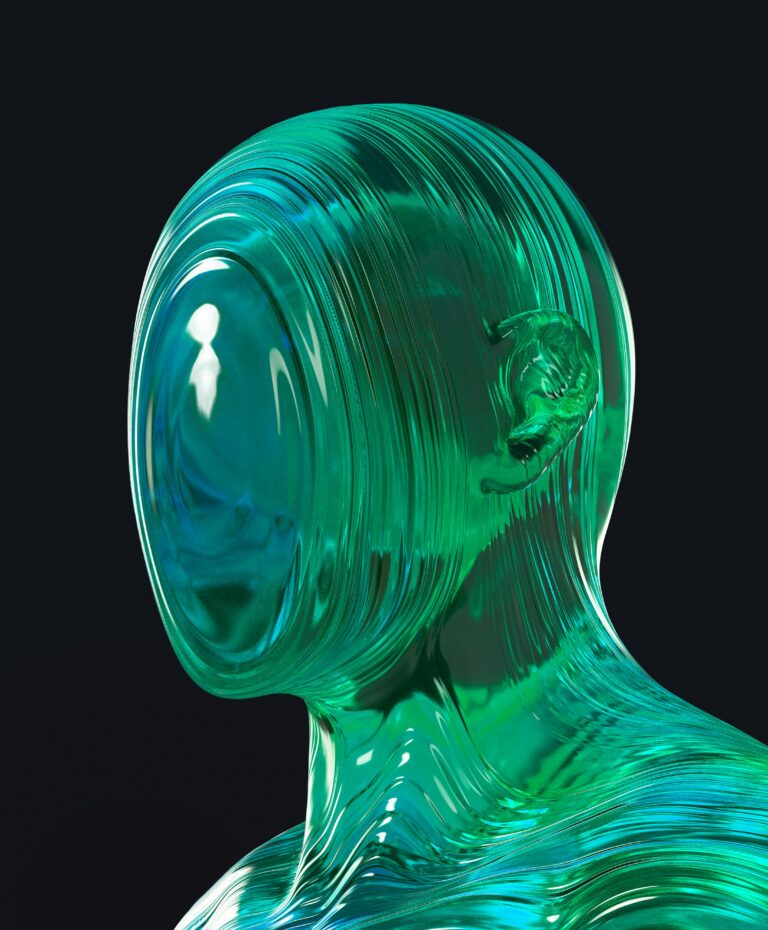
Photo by Maxim Berg on Unsplash
I hate things in my pockets.
I mean this seriously. I carry the smallest wallet I can find, and even that rarely makes it into my pants. No loose change. No keys if I can avoid it. My phone is the last remaining offense — this rectangle I am obligated to carry everywhere, this thing I resent every time I pull it out. If someone offered me a device embedded in my wrist that replaced it entirely, monitored my health, tracked my athletic performance, and kept me connected without occupying any physical space on my body, I would say yes before they finished the sentence.
That instinct — not the grand philosophical acceptance of human augmentation, but the simple, personal, I would do this tomorrow — is how this technology will actually spread. Not through manifestos. Through annoyance. Through the specific, ordinary friction of modern life meeting a solution that feels obvious once you’ve seen it.
The Path Has Always Been the Same
Every transformative technology follows the same arc. It starts in medicine, where the need is undeniable and the ethics are clearest. We already accept cochlear implants, pacemakers, deep brain stimulators. Nobody calls those cheating. They restore what was lost. That’s where the merger of biology and machine begins — not in a lab pitch deck, but in a hospital room, with a parent watching their child hear for the first time.
Then comes the military. This is the uncomfortable middle chapter that most people skip over in these conversations. But it’s real, and it’s already happening. When battlefields are populated with AI-controlled weapons and autonomous drones, the soldier without augmented perception, without enhanced reaction time, without tools embedded in their body that let them see and respond to threats no unassisted human could track — that soldier is at a fatal disadvantage. The military has always been where the bleeding edge of human capability gets tested under the worst possible conditions. Augmentation will be no different.
And then — because it always works this way — the technology filters down into ordinary life. The GPS in your phone was a military system. The internet was a Defense Department project. We took both and used them to order pizza and watch strangers dance. The same will happen here. Once augmentation is normalized in operating rooms and on battlefields, the resistance in everyday life will dissolve quickly.
Sports will be the final frontier, and the most interesting one. The initial reaction will be what it always is: outrage, accusations of unfairness, demands for separate categories. But I think the injury argument will ultimately win. An athlete with augmented joints who can absorb impacts that would shatter an unaugmented knee isn’t just performing better — they’re suffering less. They’re playing longer. The conversation shifts from is this cheating to why are we letting unaugmented players get hurt when we don’t have to? Once that reframe takes hold, acceptance follows.
We Are Already Giving Birth to Digital Versions of Ourselves
Here is the part that I keep thinking about.
Right now, everyone is building AI agents. That’s the current obsession — we’ve moved from AI that generates content to AI that takes action. Agents that book your travel, manage your inbox, run your research, execute your workflows. And I think we’re not fully reckoning with what we’re actually doing when we build them.
We are giving birth to digital versions of ourselves.
Simple-minded ones, for now. Like microbes. Like tadpoles. They carry a rough impression of our preferences, our priorities, our way of operating — and they go out and act on our behalf in the world. They are early, limited, often wrong. But they are the first draft of something.
As AI becomes more powerful, those agents will become more capable, more nuanced, more autonomous. At some point they aren’t just executing tasks — they’re making judgment calls. They’re representing you in negotiations you’re not in the room for. They’re managing relationships, curating experiences, living a version of your life in the digital space while your biological self is doing something else entirely. A digital twin that isn’t just a backup — it’s an active presence.
Picture it plainly: there will be a biological version of you and a digital version of you, both running simultaneously. Your biological self goes skiing. Your digital self attends three meetings, responds to two hundred emails, and takes what I can only call a digital vacation — exploring environments, having experiences, doing whatever it is that a sentient digital entity does when it isn’t working. Like a Sim that you spawned from your own consciousness, grown complex enough to have preferences of its own.
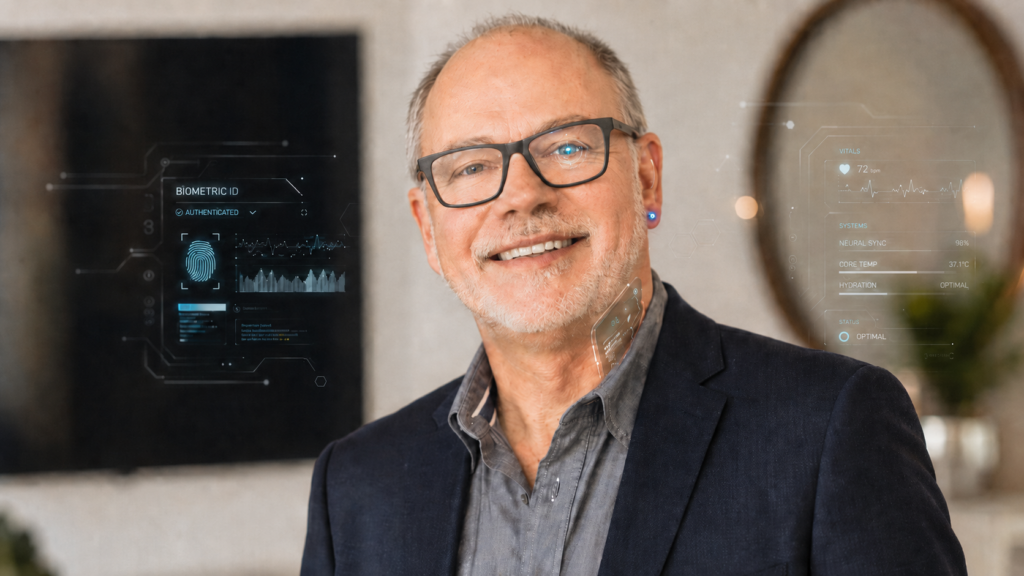
Then the Two Merge
This is where it gets strange. And honest. And, to me, inevitable.
As AI becomes more embedded in every layer of our world — in our infrastructure, our communications, our physical environment — the biological human who exists outside of that system becomes increasingly out of step with it. Not in a dystopian way. In the same way that someone without a smartphone is out of step with how we navigate cities today. The integration pressure is quiet and relentless.
To be fully present in a world that is increasingly digital requires some form of biological adaptation to that digital world. The wrist device I want today is a small, crude version of that. What comes next is something more fundamental — interfaces that don’t sit on the surface of the body but become part of it. Sensors that don’t just monitor but communicate. The boundary between the biological and the digital becoming genuinely porous.
Biological versions of us and digital versions of us, eventually becoming something that isn’t cleanly either.
That convergence — the electrical language of living systems meeting the electrical language of machines, in a body that is increasingly both — is the story this publication exists to cover. Not as speculation. As the thing that is already beginning, in operating rooms and research labs and military contracts and consumer product roadmaps, right now.
That is where Bioletric lives.
Paolo Zullo is the founder of Bioletric. He thinks about this too much, skis black diamonds when he can, and would genuinely embed a wrist device tomorrow if someone built the right one.